Why Your Car Feels Like the Brakes Are Still On After You Lift Off — Brake Drag Diagnosis
In our workshop, we often hear from tuners in Thailand, UAE, and West Africa: "After a hard run, the car feels like it's still braking." Nine times out of ten, the root cause traces back to restricted fluid return — and the brake hose is the usual suspect.
1. Collapsed Inner Liner Preventing Fluid Return
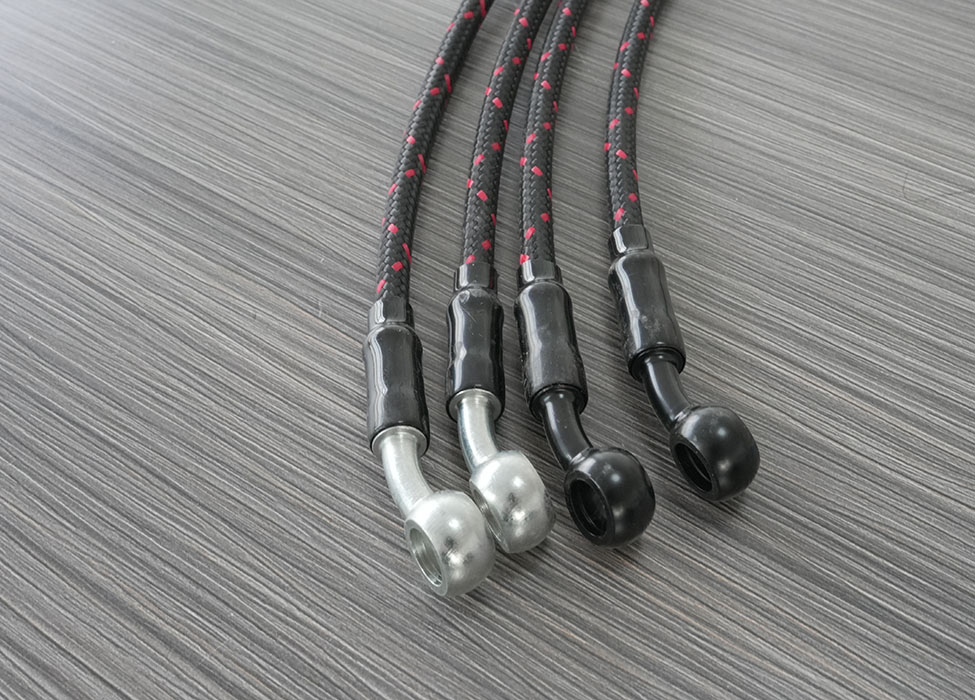
Old rubber or low-grade nylon hoses can develop an internal flap that acts like a one-way valve. Fluid pushes in under pressure but can't flow back. This "check-valve effect" keeps the caliper engaged. We see this fixed by upgrading to Silver Hydraulic Brake Line or Black Hydraulic Brake Line with PTFE core.
2. Over-Length Hose Pinched by Suspension Travel
If a Blue Hydraulic Brake Line is routed too close to control arms, it can be pinched mid-travel — especially on lifted 4×4s common in the Middle East.
3. Wrong Hose ID or Excessive Fitting Restriction
Narrow or clogged cores delay pressure release. For high-performance builds, Red Hydraulic Brake Line and Green Hydraulic Brake Line with 3.2 mm / 1/8" ID are our standard recommendation.
4. Caliper Slide Seizure (Often Blamed on the Hose)
Always rule out corroded slider pins before condemning the line — but a collapsed hose can mask the real problem by preventing proper diagnosis.
Field Check Before You Replace
- Open the bleeder — if the wheel frees up, the hose is restricted
- Feel for uneven rotor temperature after a short drive
- Inspect for bulging, cracking, or UV damage on outer jacket
FAQ – From Overseas Buyers
How often should brake hoses be replaced?
Every 4–5 years, sooner in hot or coastal climates (SE Asia / Gulf regions).
Do aftermarket braided lines really prevent drag issues?
Yes — they don't collapse internally and maintain full flow path compared to aged rubber.
Are these suitable for motorcycles?
Absolutely. We also produce Motorcycle Brake Lines in custom lengths and banjo angles.