The Silent Profit Killer: How Brake Drag Impacts Fleet Efficiency and Your Bottom Line
For fleet managers in Africa and transport companies across the Middle East and Southeast Asia, operational costs are under constant scrutiny. A vehicle suffering from brake drag is a silent but significant drain on profitability. This analysis goes beyond the mechanical symptoms to quantify the real-world impact and presents a data-backed case for upgrading to high-performance brake lines as a strategic investment, not just a repair.
Case Study: The Delivery Van Fleet with Mysterious Fuel Economy Drop
A logistics company operating 50 compact vans in Thailand noticed a 7** fleet-wide drop in average fuel economy over 18 months, alongside a 40** increase in front brake pad replacement frequency. Initial diagnostics found no engine faults. Our inspection revealed the root cause: 70** of the vans had at least one front brake hose in the early stages of internal collapse, causing mild but constant pad drag. The restricted hoses were acting as one-way valves, not allowing calipers to fully release.
Quantifying the Cost of Drag: A Three-Pillar Model
1. Direct Component Wear Costs
- Brake Pads & Rotors: Constant drag dramatically increases wear. Pads can wear 2-3 times faster, and rotors overheat, leading to warping and premature replacement.
- Wheel Bearings: Sustained heat from a dragging brake can cook the grease in wheel bearings, leading to early failure.
2. Fuel & Operational Efficiency Costs
- Increased Fuel Consumption: The engine must work harder to overcome the constant braking force. A single dragging brake can reduce fuel economy by 3-5**. For a 50-vehicle fleet, this translates to thousands in wasted fuel annually.
- Increased Engine & Drivetrain Load: Additional strain is placed on the engine, transmission, and differential.
3. Downtime & Unscheduled Maintenance Costs
- Vehicle Off-Road: Unexpected repairs for pads, rotors, or seized calipers take vehicles out of revenue service.
- Labor Costs: Frequent, unscheduled brake jobs require more mechanic hours.
The Root Cause Analysis: Why OEM Rubber Hoses Fail in Fleet Duty
Fleet vehicles endure severe service cycles: constant stop-and-go, heavy loads, and exposure to harsh climates. The standard rubber brake hose is the weak link. The internal degradation is a chemical and thermal process:
- Heat Cycling: Repeated heating (from braking) and cooling causes the rubber's polymer chains to break down, making the inner liner sticky and prone to adhesion.
- Fluid Contamination: Moisture in old brake fluid promotes internal corrosion of the hose's fabric reinforcement, creating debris that further abrades the liner.
- Pressure Pulsation: The constant apply/release pressure cycles fatigue the bond between the liner and reinforcement, leading to delamination—the precursor to the "check valve" effect causing drag.
The Proactive Fleet Solution: A Standardized Brake Line Upgrade Protocol
The solution implemented for the Thai fleet involved a scheduled, vehicle-by-vehicle upgrade:
Step 1: Complete Hydraulic System Renewal. Each van received a full brake fluid flush and replacement with high-temperature DOT 4 fluid.
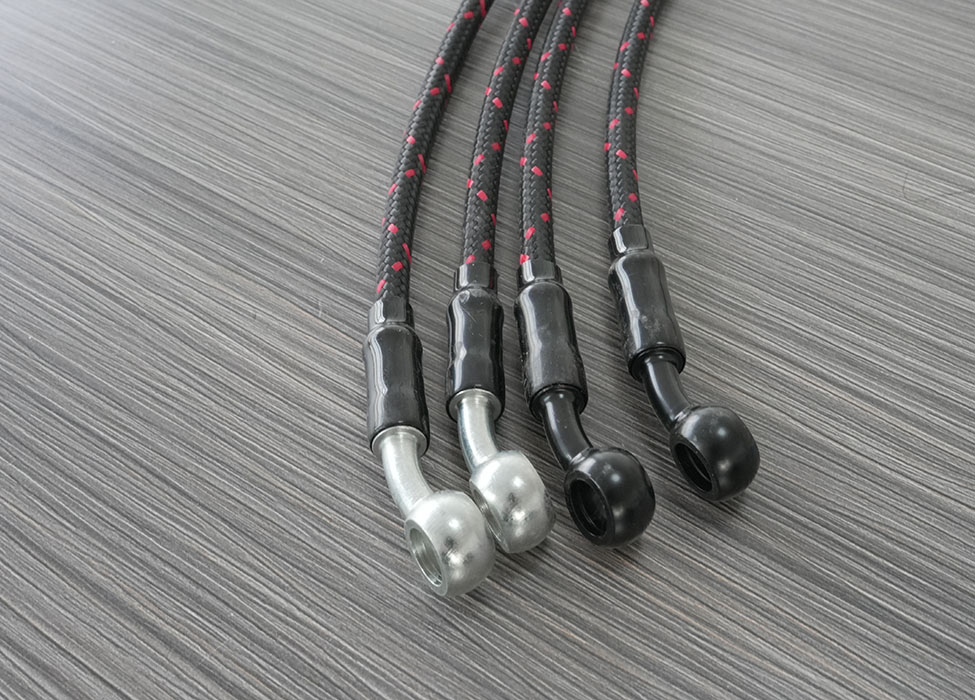
Step 2: Replacement of All Flexible Lines. All four corner brake hoses were replaced with our heavy-duty, fleet-spec Black Hydraulic Brake Line kits. The black color was chosen for its OEM-like appearance and superior durability against UV and environmental exposure.
Step 3: Caliper Service. Slide pins were serviced during the installation to ensure full system health.
The Result: Within one month, fleet fuel economy normalized. Brake pad life returned to standard intervals. The calculated payback period for the entire upgrade project was under 11 months based on fuel and part savings alone.
Our Product Range for Fleet & Commercial Applications
We are a Brake Line Brake Hose factory with a large stock, ready to support your fleet needs:
- Black Hydraulic Brake Line Kits: The premier fleet choice. Stealthy, professional appearance with maximum durability. The PTFE core ensures zero flow restriction to prevent drag.
- Blue Hydraulic Brake Line Kits: Excellent for easy visual inspection and maintenance checks. Popular with workshops and fleets that color-code vehicles.
- Silver Hydraulic Brake Line Kits: Offers a technical, alloy-like look that shows less dirt. A practical and durable option.
- Bulk & Custom Solutions: We support just-in-time logistics for stable inventory. For unique or older fleet vehicles, we provide custom manufacturing. Send us a sample or drawing, and we'll produce a set that matches your exact specifications.