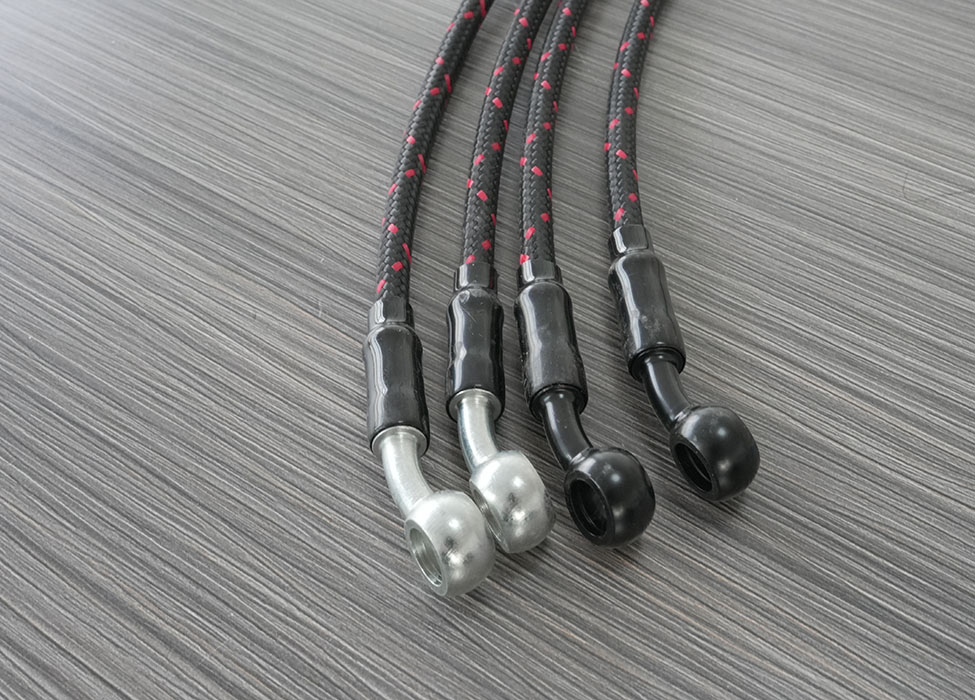
The Hydraulic Link: Why Brake Line Integrity is Fundamental to Pedal Feel and System Health
In brake system diagnostics, the flexible hose is often the last component checked. However, for engineers and experienced technicians, it's a key variable in the hydraulic equation. A hard brake pedal isn't just about the booster or calipers; it can be a symptom of a system struggling against inefficiencies, some of which originate in the lines themselves. This technical analysis explores the role of brake hoses in pressure delivery and how material science in modern upgrades directly addresses legacy weaknesses.
The Hydraulic Circuit: Understanding Pressure Loss and Its Effects
Think of the brake system as a closed hydraulic loop. Your foot pressure on the master cylinder piston creates hydraulic pressure. This pressure must travel instantly and without loss to the caliper pistons. Any compliance or restriction in this circuit degrades performance.
Two Key Hose-Related Issues:
- Volumetric Expansion (Ballooning): When a rubber hose expands under pressure, it absorbs a volume of brake fluid. This fluid is taken from the volume meant to move the caliper piston. The result is longer pedal travel and a less direct feel. In extreme cases, if one hose is significantly weaker than the others, it can lead to an imbalance in pedal firmness.
- Internal Flow Restriction: A partially collapsed hose or one with severe internal degradation can act as a flow restrictor. While this might sometimes manifest as drag (blocking return flow), it can also slightly dampen the pressure spike during initial application, potentially altering pedal feedback.
Material Breakdown: Why OEM Rubber is a Compromise
OEM EPDM/NBR rubber hoses are designed for cost, flexibility, and a 7-10 year service life in moderate conditions. They are not optimized for sustained performance.
| Environmental Stressor | Effect on Standard Rubber Hose | Consequence for Pedal/System |
|---|---|---|
| High Underhood Temperatures (Gulf States, SE Asia) | Accelerates chemical breakdown of inner liner, causes outer cover to harden and crack. | Increased risk of internal particle generation (potential for blockages) and external failure. Pedal feel may degrade over time as the hose material changes. |
| Road Salt & Coastal Humidity (Japan, Coastal Africa) | Corrodes the internal reinforcing mesh (often textile) and external metal fittings. | Weakened reinforcement can lead to bulging or collapse. Corroded fittings can leak or seize, complicating service. |
| Abrasion from Off-Road Use (Africa, Middle East) | Wears through the outer rubber jacket, exposing reinforcement to further damage and eventual rupture. | Risk of sudden, total brake failure. A compromised but not yet burst hose may exhibit unusual stiffness or flexibility. |
The Engineered Upgrade: Braided Stainless Steel Over PTFE
This construction isn't just for race cars; it's an exercise in eliminating the failure points of rubber.
1. The PTFE (Teflon) Inner Liner
This is the fluid conduit. PTFE is:
- Chemically Inert: It does not react with any standard (DOT 3, 4, 5.1) or silicone (DOT 5) brake fluid. This eliminates the internal degradation and "gumming" that plagues rubber.
- Extremely Low Friction: Provides a hydraulically smooth bore for optimal fluid dynamics.
- Temperature Resistant: Stable across a much wider temperature range than rubber (-73°C to +260°C).
2. The Stainless Steel Braid
This is the structural layer. It provides:
- Near-Zero Expansion: Typically less than 2** under pressure, ensuring immediate pressure transfer and a direct pedal.
- High Tensile and Burst Strength: Burst pressures often exceed 4,000 psi, providing a massive safety margin.
- Abrasion and Cut Resistance: Protects the inner liner from external damage. This is why a Black Hydraulic Brake Line (often with a PVC coating over the braid) is the standard for off-road and rally.
3. The Colored Coating (Aesthetic & Protective)
The vibrant colors on our lines, like Blue or Red, are a durable powder coat. It adds an extra layer of corrosion protection and allows for customization. A Silver line offers a more technical, OEM-plus look.
Selection and Procurement Guide for International Buyers
Choosing the right line requires matching the product to the application and market.
- For High-Performance Street & Track (Japan, UAE): Prioritize pedal feel. A full vehicle kit in a color like Red or Blue is ideal. Ensure the kit is certified for road use (DOT/ECE).
- For Off-Road & Overland (Africa, Australia, Middle East): Durability is key. Specify lines with an additional abrasive sleeve. Our Black lines often come with this option.
- For Motorcycles (All Regions): Motorcycle Brake Lines are a specialized product. They require specific lengths, banjo bolt angles, and often different front/rear specifications. Never use automotive lines on a motorcycle.
- For Fleet/Commercial Vehicles: Consider the total cost of ownership. Upgrading to braided lines can reduce downtime from failures. A subtle color like Silver or Black is often preferred.
Our Core Manufacturing Capabilities and Product Range
As a factory, we support global distributors with:
- Full Range of Colored Braided Lines: Blue, Green, Pink, Red, Silver, Black.
- Vehicle-Specific Kits: For cars, trucks, SUVs, and motorcycles.
- Custom Manufacturing: We can produce lines to any length, with any fitting, in most colors. This is essential for custom builds, restorations, or prototype vehicles.
- Quality Assurance: Our automated production ensures consistency, and we provide necessary compliance documentation for smooth import into your market.
Have a complex application or bulk order requirement? Our technical sales team is ready to assist. Send us your specifications or CAD drawings for a formal quote.