Recent News
-
 2026-2-2
Why Choose Retrofit Brake Lines?

Brake drag, a condition where the pads maintain light contact with the rotors after pedal release, is a common yet costly issue for vehicles in all climates. For technicians and fleet managers in Southeast Asia, the Middle East, Japan/Korea, and Africa, identifying and resolving drag is critical to prevent component wear, fuel waste, and safety hazards. This technical analysis breaks down the primary causes, with a specific focus on how hydraulic line integrity plays a more significant role than often assumed, and presents upgrade paths for a permanent fix.
Recognizing drag early prevents major damage. Key indicators include:
After normal driving, one or more wheels (especially the front) are noticeably hotter to the touch than others. A distinct burning smell from the wheel well is a definitive sign of constant friction.
The vehicle feels sluggish, as if the parking brake is slightly engaged. This constant load on the drivetrain leads to measurably increased fuel consumption.
Pads on the dragging corner will wear out 3-4 times faster than others. Rotors often develop severe scoring, blue discoloration (from overheating), and may warp.
While a seized caliper piston or slide pin is the usual suspect, the brake hydraulic system must be evaluated as a whole.
This includes seized piston seals, corroded or dry slide pins, and a damaged or missing caliper anti-rattle clip. This is the first and most common point of inspection.
If the caliper mechanically moves freely, the issue may be hydraulic. Pressure is failing to release from the caliper piston bore. Culprits include:
Replacing aging, flexible rubber hoses is a proactive measure that addresses a key vulnerability in the hydraulic circuit.
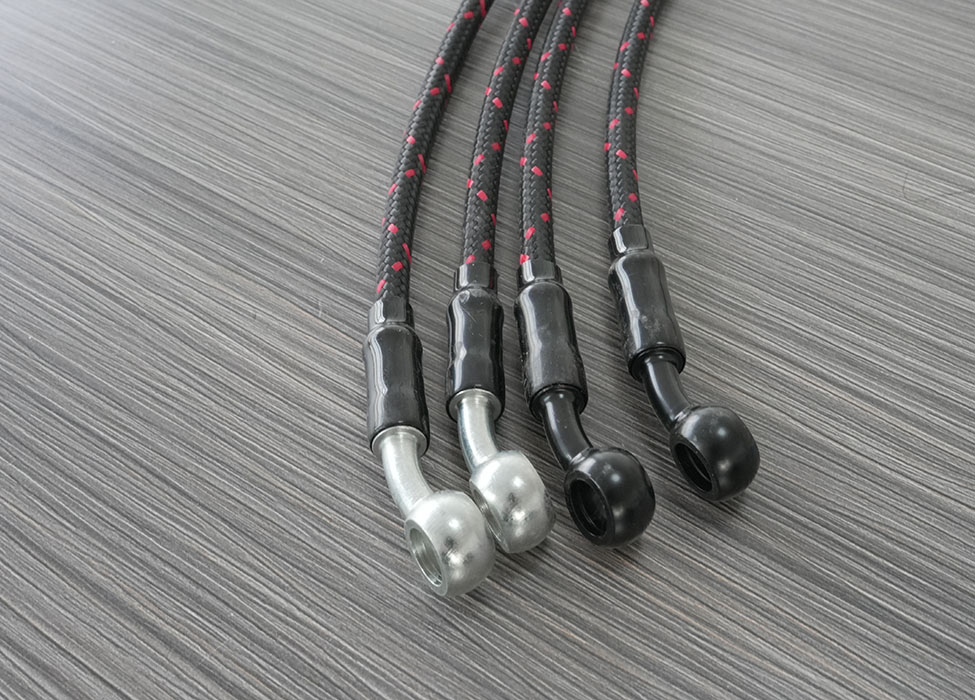
The polytetrafluoroethylene (PTFE) inner core of a performance brake line is chemically inert and has a perfectly smooth bore. It cannot delaminate or degrade in a way that would impede return fluid flow. Whether you choose a classic silver braided line or a colored option like red or blue, the core material ensures unimpeded fluid movement in both directions.
A firm, non-expanding hydraulic line provides more than just a better pedal feel. It creates a crisper, more definitive pressure release signal. When combined with a properly functioning caliper, this can promote more complete piston retraction compared to a spongy, damped system with old rubber lines.
In regions with high heat (Middle East) or salt (coastal Japan/Korea), rubber hoses degrade rapidly. External cracking is visible, but internal degradation happens sooner. A stainless steel braided line is immune to these environmental attacks, protecting the integrity of the fluid passage over the long term and preventing the internal breakdown that leads to drag.
For standard rubber hoses, a thorough inspection for external and internal integrity should be part of every major brake service. Proactive replacement at the 5-year mark is a cost-effective strategy to prevent drag and other failures. Performance braided lines, like our green or pink hydraulic lines, have a much longer service life and are not subject to the same internal degradation.
No. The benefit is universal. Any vehicle, from a family sedan to a commercial truck, suffers from the same rubber hose degradation. The improved reliability and safety from eliminating expansion and internal collapse are valuable for all applications. This is equally true for motorcycle brake lines, where precise feel and reliability are paramount.
Yes. We manufacture application-specific kits for virtually all vehicles. The key is providing accurate vehicle information. For custom or modified applications, sending us the old line or a detailed diagram ensures a perfect fit, eliminating fitment issues that could cause improper routing and new problems.
For Maximum Durability & Heat Resistance: Choose a standard silver stainless steel braided line. It is the workhorse for demanding conditions.
For Performance with Custom Styling: Our colored lines like red, blue, or green offer identical performance with a personalized aesthetic.
Critical Installation Note: When installing new lines, always ensure they are not twisted and have proper clearance throughout suspension travel. Use a flare nut wrench to avoid damaging fittings.
Maintenance Tip: Flush brake fluid every two years with high-quality DOT 4 or DOT 5.1 fluid. This prevents moisture-induced corrosion inside the caliper bores and master cylinder, which is a primary cause of piston and seal sticking.
Need help diagnosing a persistent drag issue or sourcing a custom line set? Our technical team is available for support. Contact us with your vehicle details and symptoms for expert guidance.
