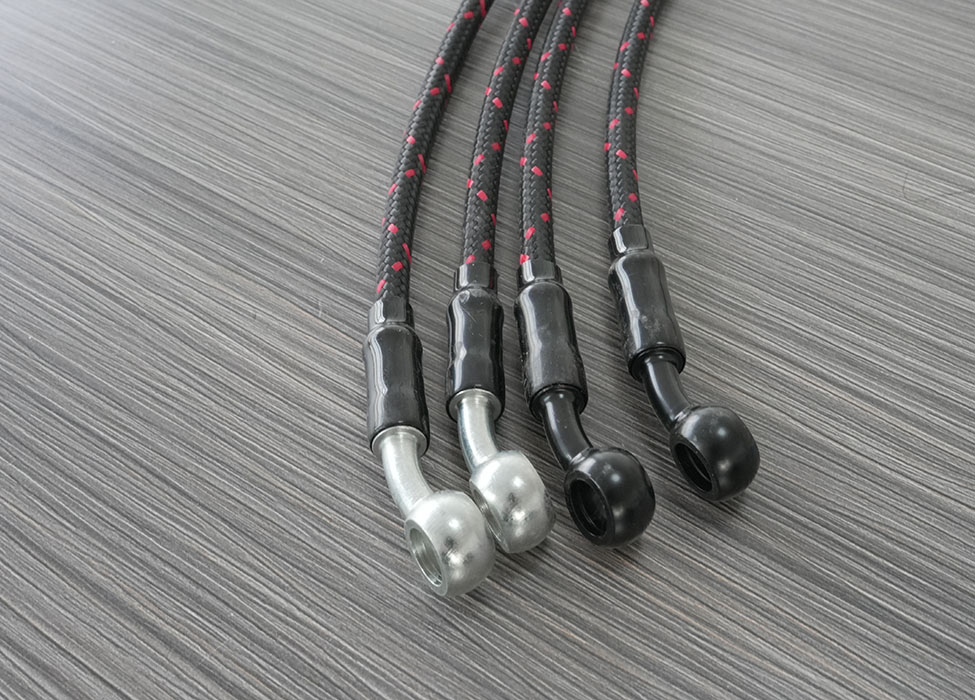
Motorcycle Brake Hose Leakage: Common Causes, Diagnosis and Solutions
A leaking brake hose is not a problem that should be ignored. Brake fluid loss can reduce hydraulic pressure and, depending on the severity of the leak, affect braking performance.
For motorcycle owners, repair shops and brake component distributors, the important question is not only where the brake fluid is coming from, but why the leakage occurred in the first place.
Brake hose leakage can be related to hose deterioration, damaged fittings, incorrect installation, abrasion, excessive bending or a damaged sealing surface. Finding the actual cause helps prevent the same problem from happening again.
Where Does a Motorcycle Brake Hose Usually Leak?
A hydraulic brake hose assembly normally includes the flexible hose, end fittings, sealing washers and connection points. Leakage can therefore occur at several locations.
Leakage From the Hose Body
If brake fluid appears directly on the hose surface, inspect the hose for cracking, cuts, abrasion, swelling or other physical damage.
Rubber hoses can deteriorate over time because of heat, environmental exposure and repeated flexing. A damaged hose should not simply be wrapped or repaired externally and returned to normal service.
Leakage Around the Fitting
If fluid appears around a banjo fitting or threaded connection, the problem may be related to the fitting, sealing washer, thread engagement or installation.
Do not assume that replacing the hose itself will solve every fitting-related leak. The complete assembly needs to be checked.
Leakage After Brake Hose Installation
A newly installed hose can leak if the fitting specification is incorrect, the sealing components are unsuitable, the connection is damaged or the hose has been installed under excessive stress.
This is why brake hose length and fitting configuration should be confirmed before production or installation.
Common Causes of Brake Hose Leakage
1. Age and Material Deterioration
Flexible brake hoses are exposed to heat, vibration, moisture and repeated movement. Over time, the material can deteriorate.
Look for surface cracking, swelling, hardening or other abnormal changes.
2. External Abrasion
A hose that continuously rubs against a frame, fork, wheel or other component can gradually lose its protective surface.
This is especially important on modified motorcycles where the original brake hose routing has been changed.
3. Excessive Bending or Twisting
A brake hose should follow a suitable routing path. Sharp bending or unnecessary twisting can place additional stress on the hose and fittings.
4. Damaged Sealing Components
Banjo-style brake connections commonly rely on sealing washers or other specified sealing components. A damaged or incorrectly installed seal can cause leakage at the connection.
5. Incorrect Fitting Specification
Similar-looking brake fittings are not necessarily interchangeable.
Thread size, fitting type, angle and sealing method should all be confirmed before ordering a custom brake hose.
How to Diagnose a Leaking Brake Hose
Step 1: Identify the Wet Area
Clean the surrounding area and determine where the brake fluid is appearing. The highest wet point is not always the actual source because fluid can travel along the hose or nearby components.
Step 2: Inspect the Hose Surface
Check the entire hose for cracks, cuts, abrasion, swelling or abnormal deformation.
Step 3: Check Both Ends
Inspect the master cylinder connection and caliper connection separately.
Step 4: Check Hose Routing
Look for contact with moving parts, sharp edges or excessive bending.
Step 5: Check the Complete Brake System
If fluid loss has occurred, the brake system should be properly inspected and serviced before normal riding.
When Should a Leaking Brake Hose Be Replaced?
A brake hose showing serious deterioration, cracking, swelling, leakage or significant abrasion should be replaced rather than treated as a cosmetic problem.
The replacement hose should match the application, fitting configuration, length, routing and brake system requirements.
Can a Braided Brake Line Reduce Hose Problems?
Reinforced brake lines are commonly selected for motorcycle modification and aftermarket applications because the reinforcement helps control hose expansion and provides mechanical support around the inner tube.
Our Blue Hydraulic Brake Line, Red Hydraulic Brake Line and Black Hydraulic Brake Line are examples of customized hydraulic brake line options for customers who also require different appearance configurations.
Color, however, is only one part of the specification. The internal construction, reinforcement, fittings and assembly quality are more important when selecting a brake hose for actual use.
Why Reinforced Construction Is Used
The reinforcement is designed to support the inner hose and control dimensional changes under hydraulic pressure.
It does not eliminate the need for correct installation, inspection or maintenance.
How to Prevent Motorcycle Brake Hose Leakage
- Inspect the hose regularly.
- Avoid contact with sharp edges.
- Check the hose after motorcycle modifications.
- Use the correct fittings and sealing components.
- Avoid excessive twisting during installation.
- Check hose routing through the full steering range.
- Replace severely deteriorated hoses.
Brake Hose Selection for Modified Motorcycles
Modified motorcycles often require a different brake hose length or fitting arrangement than the original configuration.
If the handlebars, forks, master cylinder or caliper have been changed, do not automatically reuse the original hose dimensions.
Information Useful for a Custom Brake Hose
- Motorcycle model and year
- Front or rear brake application
- Required hose length
- Fitting type
- Thread specification
- Fitting angle
- Photographs of the original hose
- Drawing or sample if available
Our Hydraulic Brake Line Solutions
We manufacture customized hydraulic brake line products for motorcycle aftermarket, replacement and modification applications.
Depending on the project, customers can discuss hose length, fitting configuration, fitting angle, outer protection and appearance requirements.
We also supply different color options including Green Hydraulic Brake Line, Pink Hydraulic Brake Line and Silver Hydraulic Brake Line.
Have a Sample or Drawing?
If you are not sure which hose length or fitting configuration you need, send us a drawing, sample or clear photographs.
Our engineers can review the basic dimensions and discuss the appropriate brake hose construction with you.
Contact Us for Custom Hydraulic Brake Lines
FAQ About Motorcycle Brake Hose Leakage
How do I know if my motorcycle brake hose is leaking?
Look for brake fluid around the hose body, fittings or connection points. Cracking, swelling, wet areas and unexplained brake fluid loss should be investigated.
Can a small brake hose leak be ignored?
No. A hydraulic brake system depends on maintaining fluid pressure. Any suspected brake fluid leakage should be inspected before normal riding.
How often should motorcycle brake hoses be replaced?
There is no universal replacement interval for every motorcycle. Hose condition, material, operating environment and installation all affect service life.
Are braided brake lines safer than standard hoses?
A properly specified and correctly installed reinforced brake line can provide controlled hose expansion and reliable hydraulic pressure transmission. Overall braking safety still depends on the complete brake system and correct maintenance.
Can you make a custom replacement brake hose?
Yes. Send us the original hose, drawing, dimensions or photographs. We can discuss the required length, fittings and configuration for your application.