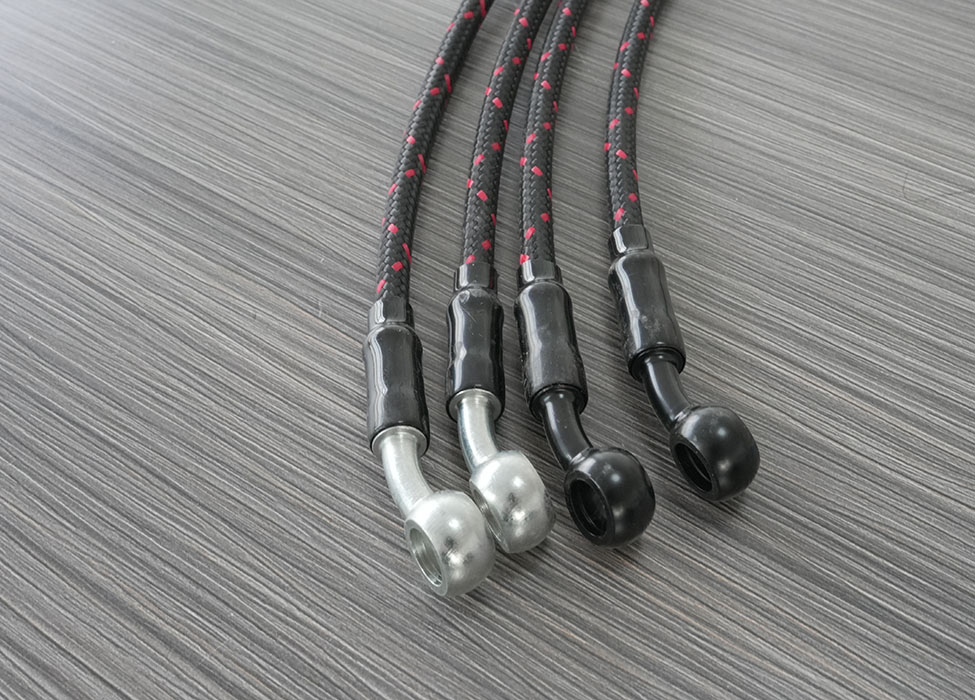
How to Source Custom Brake Hose Assemblies: RFQ Preparation, Supplier Evaluation and Production Approval
For aftermarket brands, importers, distributors and OEM purchasing teams, sourcing a custom brake hose assembly involves more than comparing unit prices. The buyer and manufacturer must agree on the technical specification, validation requirements, approval process and production controls before a project moves into regular supply.
A well-prepared request for quotation (RFQ) helps reduce specification gaps, repeated sample revisions and misunderstandings during mass production.
What Should Be Included in a Brake Hose RFQ?
Application and Annual Demand
Identify the target vehicle or equipment, intended use, destination market and expected order quantity. If the product is for a modified vehicle, provide relevant information about the brake layout and installation environment.
Technical Drawing and Sample
A drawing should identify overall length, measurement reference points, fitting orientation and other critical dimensions. A physical sample may help clarify details that are difficult to communicate through photographs alone.
Specify the drawing revision and indicate which dimensions are critical to fitment. Do not rely on a photograph as the sole definition of a hydraulic brake component.
Material and Connection Requirements
Identify the required hose construction, end-fitting interfaces, protective covering and any customer-specific requirements. The supplier should confirm whether the requested configuration is technically suitable for the intended hydraulic service.
Applicable Standards and Validation
State the required regulations, customer specifications, test methods and acceptance criteria. Where a project requires supporting documentation, define it before production rather than requesting unspecified certification after the product has been manufactured.
How to Evaluate a Potential Manufacturer
Engineering Review Capability
A suitable supplier should be able to review drawings, clarify fitting compatibility, identify missing information and explain which requirements need validation. Technical questions should be resolved before tooling or production commitments are made.
Manufacturing Process Control
Ask how the supplier controls assembly operations, dimensional inspections, nonconforming products and changes to approved specifications. The level of control should be appropriate to the product risk and customer requirements.
Testing and Documentation
Review the available evidence for the actual product and intended application. Confirm the scope, method and acceptance criteria of relevant tests instead of relying on broad statements about quality or pressure resistance.
Repeat-Order Consistency
Ask how approved drawings, sample revisions, component changes and production batches are identified. These controls help maintain consistency between the initial approved sample and subsequent orders.
Why Sample Approval Matters Before Mass Production
A sample allows the buyer to confirm fitment, dimensions, connection orientation and other defined requirements before authorizing a larger production run.
Recommended Approval Sequence
- Submit the RFQ, drawing, sample and application information.
- Review the supplier's technical questions and proposed specification.
- Confirm the final drawing and applicable validation requirements.
- Evaluate the sample against agreed dimensional and functional criteria.
- Record approval and control subsequent specification changes.
- Define production inspection, packaging and delivery requirements.
Sample approval should not be treated as proof of every possible long-term performance characteristic. The validation plan must address the relevant requirements for the intended application.
Selecting a Product Category for Your Project
Different projects may require different hose constructions and finished assemblies. The correct product must be selected using verified technical specifications, rather than assuming that a particular material is suitable for every vehicle.
- Teflon Brake Hose for projects specifying a compatible PTFE-based hose construction.
- PTFE Brake Line Assembly for integrated hose and fitting requirements.
- Nylon Brake Hose Assembly for projects where the specific assembly is verified as suitable for its intended service.
- Rubber Brake Hose Assembly for compatible replacement and other specified applications.
Common Mistakes in Custom Brake Hose Purchasing
Comparing Prices Before Finalizing Specifications
Two quotations may describe different materials, fittings, tests or documentation. Confirm that suppliers are quoting the same approved specification before comparing unit prices.
Assuming Similar Fittings Are Interchangeable
Thread dimensions alone do not establish compatibility. Seat geometry, sealing method, fitting angle and available installation clearance must also be checked.
Changing the Design Without Revalidation
Changes to hose construction, fitting geometry or assembly processes may affect fitment and performance. Define a change-control procedure and determine whether additional validation is needed before accepting a revised product.
Leaving Packaging and Identification Until the End
Labeling, product identification, batch information and packaging can affect warehouse operations and aftermarket distribution. Include these requirements in the original RFQ.
Frequently Asked Questions
What is the most useful information to send for a custom quotation?
Start with the intended application, drawing or sample, overall dimensions, fitting details, estimated quantity and required compliance or testing documentation.
Can a manufacturer develop a brake hose from a sample?
A sample can support technical review, but its suitability and manufacturability must be confirmed. Critical dimensions, material requirements and performance criteria should be documented before approval.
Should a buyer request test reports for every order?
The required documentation depends on the contract, product specification, applicable regulations and quality plan. Define which records are required for initial approval and which are required for routine production.
Request a Custom Brake Hose Quotation
If you are developing a new product line or sourcing assemblies for distribution, prepare the technical drawing, target application, estimated demand and applicable validation requirements before contacting the manufacturer.