Recent News
-
 2026-2-2
Why Choose Retrofit Brake Lines?

The brake line system plays a vital role in transmitting hydraulic pressure from the master cylinder to the brake calipers. When brake hoses begin to wear or become internally restricted, braking performance can decrease significantly. For vehicle owners, repair shops, and automotive distributors, learning how to detect brake line issues early is essential for safety and long-term vehicle reliability.
If the brake pedal feels soft or requires more travel before the vehicle slows down, it may indicate internal expansion or aging of the brake hose.
Visible fluid near hose fittings or along the brake line usually means the hose material is deteriorating or the connection is failing.
Blocked or partially collapsed brake hoses may cause different pressure levels between wheels, resulting in the vehicle pulling to one side during braking.
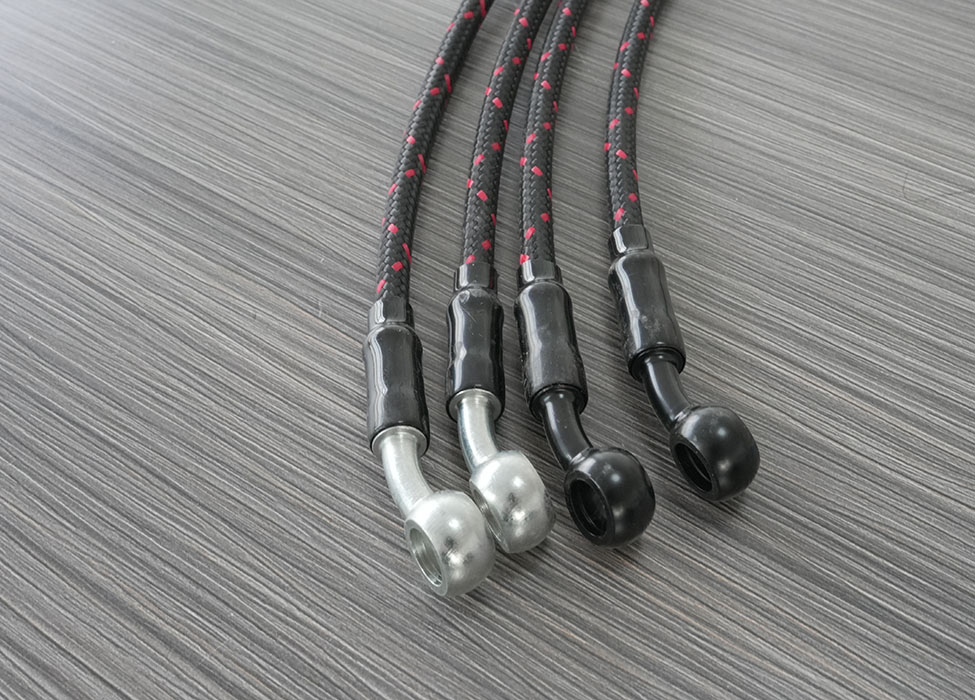
Modern performance brake hoses are designed to maintain stable hydraulic pressure even under high temperature and heavy braking conditions. Compared with traditional rubber hoses, reinforced hydraulic brake lines provide stronger pressure resistance and better braking response.
Many performance vehicles and motorcycles today use upgraded brake hoses such as Blue Hydraulic Brake Line, Red Hydraulic Brake Line, and Black Hydraulic Brake Line.These hoses are designed for higher pressure resistance and improved durability.
Automotive brake systems require different hose solutions depending on vehicle type. Performance upgrades often include products such as Green Hydraulic Brake Line,Silver Hydraulic Brake Line, and Pink Hydraulic Brake Line.These hoses are commonly used in motorcycles, performance cars, and modified vehicles.
If you have drawings, specifications, or customization requirements, you can contact our engineering team for technical support:Contact Us
Brake hoses should generally be inspected every two years and replaced if signs of wear or damage appear.
Yes. Reinforced brake hoses reduce expansion and maintain stable hydraulic pressure, improving braking response.
Most vehicles can benefit from upgraded brake hoses if the correct fittings and specifications are used.
