How Long Do Stainless Steel Braided Brake Hoses Last?
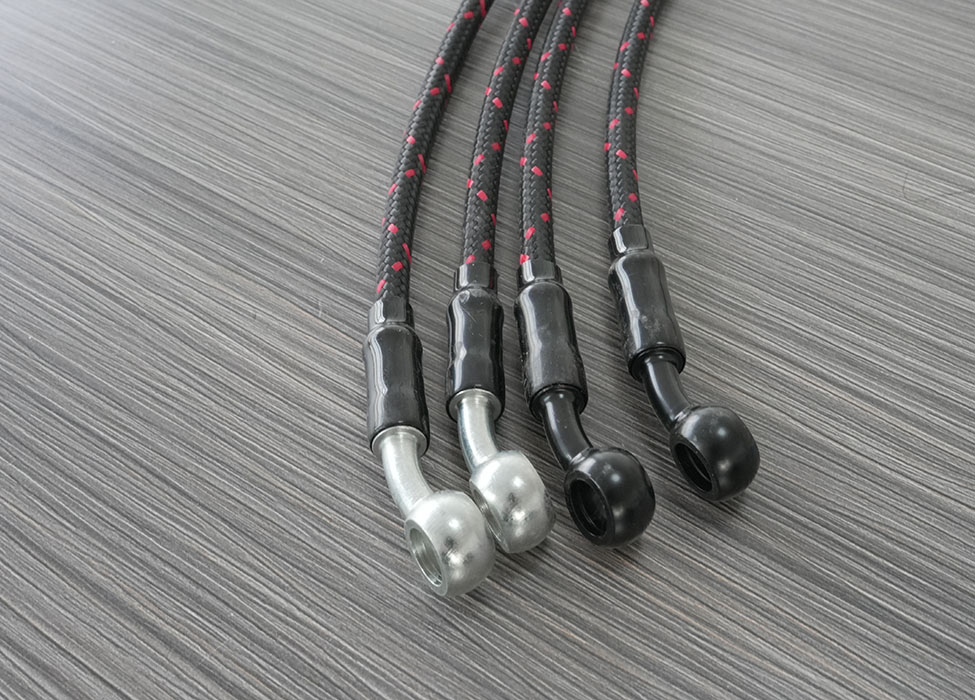
Stainless steel braided brake hoses are widely used on motorcycles, performance cars and modified braking systems. Compared with conventional rubber hoses, their reinforced construction provides better resistance to pressure-related expansion and mechanical stress.
But one question is often overlooked when choosing a braided brake line: how long does a stainless steel braided brake hose actually last?
There is no single mileage or number of years that applies to every brake hose. Actual service life depends on the hose construction, brake fluid, temperature, installation, routing, vibration, environmental exposure and frequency of use.
For this reason, a good maintenance approach is to consider both service age and actual hose condition.
What Determines the Service Life of a Stainless Steel Braided Brake Hose?
1. Inner Tube Material
The inner tube is the part that directly carries brake fluid. PTFE is commonly used in performance brake hose construction because of its chemical resistance and temperature characteristics.
The quality and consistency of the inner tube have a direct influence on the long-term performance of the finished hose.
Why Is the Inner Tube Important?
The stainless steel braid provides reinforcement, but it does not replace the function of the inner tube. A properly designed brake hose requires the inner tube, reinforcement and end fittings to work together as one assembly.
2. Stainless Steel Braid Quality
The external stainless steel braid helps control expansion and provides mechanical reinforcement around the inner tube.
Braid wire quality, braid density and manufacturing consistency can affect the mechanical performance of the hose.
3. Outer Protective Layer
Some braided brake hoses use an additional PVC or other protective coating over the stainless steel braid.
This layer can help reduce abrasion and protect the reinforcement from direct environmental exposure.
4. Operating Temperature
Brake components can become hot during repeated braking. Motorcycles used for mountain riding, racing, heavy traffic or high-speed applications may experience more demanding thermal conditions than motorcycles used for short daily commuting.
5. Installation and Hose Routing
Incorrect installation can shorten the life of almost any brake hose.
A hose that is continuously stretched, twisted, sharply bent or rubbing against the motorcycle frame can experience unnecessary mechanical stress.
How Many Years Can a Braided Brake Hose Last?
It is better not to give a universal number of years for every stainless steel braided brake hose.
A properly manufactured hose installed correctly and operated in a suitable environment may remain serviceable for many years. However, age should always be considered together with actual condition.
Why Age Alone Is Not Enough
Two motorcycles may have brake hoses of the same age but completely different conditions.
One motorcycle may be used occasionally in a dry environment, while another may be exposed to high temperatures, rain, road salt, vibration and frequent hard braking.
The inspection result is therefore more useful than simply counting years.
5 Signs That a Braided Brake Hose Should Be Inspected
Visible Abrasion
If the outer surface is continuously rubbing against another component, inspect the hose carefully and correct the routing.
Damaged Protective Coating
Damage to the outer protective layer can expose the stainless steel reinforcement to environmental conditions and mechanical contact.
Leakage Around the Fittings
Brake fluid around a hose connection should never be ignored. The fitting, sealing components and hose assembly should be checked.
Abnormal Swelling or Deformation
Unexpected swelling or deformation can indicate a problem with the hose structure.
Changes in Brake Lever Feel
A soft or inconsistent brake lever can have several causes, including air in the system, brake fluid condition, master cylinder problems, caliper problems or hose issues.
The complete hydraulic system should be inspected rather than assuming that the hose is always the cause.
Does a Stainless Steel Braided Brake Hose Last Longer Than a Rubber Hose?
A stainless steel braided hose has a different construction from a conventional rubber hose. The reinforcement layer can improve resistance to mechanical stress and control pressure-related expansion.
However, it would be inaccurate to say that every braided brake hose automatically lasts longer than every rubber hose.
Material quality, manufacturing process, installation and operating environment all matter.
Rubber Hose
Rubber hose remains suitable for many standard hydraulic applications because of its flexibility and practical installation characteristics.
Our Black Hydraulic Brake Line can be considered for customers looking for a clean and understated brake line appearance.
Teflon/PTFE-Based Construction
For performance applications, PTFE-based constructions are commonly selected for their chemical resistance and temperature characteristics.
A reinforced PTFE hose can combine a chemically resistant inner tube with stainless steel reinforcement.
Color Options for Stainless Steel Braided Brake Lines
Color does not determine the pressure capability or service life of a brake hose. It is mainly a customization and identification option.
Blue Hydraulic Brake Line
Our Blue Hydraulic Brake Line can be used when a customer wants a more visible customized appearance.
Red Hydraulic Brake Line
Our Red Hydraulic Brake Line is another option for motorcycle customization and performance-oriented projects.
Silver Hydraulic Brake Line
For customers who prefer the traditional metallic appearance of stainless steel reinforcement, our Silver Hydraulic Brake Line provides a classic appearance.
How to Extend the Service Life of a Braided Brake Hose
Keep Correct Hose Routing
Make sure the hose does not contact sharp edges, moving components or excessively hot surfaces.
Avoid Excessive Bending
Follow the manufacturer's recommended minimum bend radius and avoid forcing the hose into a tight bend.
Inspect the Fittings
Check the connection points during routine brake maintenance.
Keep the Brake System Clean
Brake fluid and external contaminants should be handled according to the manufacturer's maintenance recommendations.
Need a Customized Braided Brake Hose?
If you are unsure about hose construction, length, fitting angle, color or application, send us your drawing, sample, photos, motorcycle model or existing hose.
Our factory can review the specifications and recommend a suitable configuration for your project.
Contact us for customized brake hose solutions.
FAQ About Stainless Steel Braided Brake Hose Lifespan
How often should a stainless steel braided brake hose be replaced?
There is no universal replacement interval. Inspect the hose regularly and follow the vehicle manufacturer's maintenance recommendations. Replace it when significant damage, leakage, deterioration or other safety concerns are identified.
Does a braided brake hose improve safety?
A properly designed braided brake hose can provide more consistent hose behavior under hydraulic pressure. However, brake safety depends on the complete system, including brake pads, discs, calipers, master cylinder, brake fluid and correct installation.
Is a stainless steel braided brake hose suitable for every motorcycle?
Many motorcycles can use braided brake lines, but the hose must match the specific application. Length, fittings, thread, banjo angle, routing and ABS configuration should be confirmed before ordering.
Our Main Hydraulic Brake Line Products
- Blue Hydraulic Brake Line
- Green Hydraulic Brake Line
- Red Hydraulic Brake Line
- Silver Hydraulic Brake Line
- Black Hydraulic Brake Line
- Pink Hydraulic Brake Line
We provide hydraulic brake line solutions for motorcycles, modified vehicles, aftermarket applications, workshops, distributors and OEM projects.