Heat, Hose Failure, Drag- A Maintenance Guide for Tropical Arid Climates
Heat, Hose Failure, and Drag: A Maintenance Guide for Tropical & Arid Climates
Why Your Operating Environment Accelerates Brake Drag Issues
If you're operating vehicles in Southeast Asia's humidity, the Middle East's extreme heat, or coastal Africa's salt-laden air, your brake components face a hostile environment. Heat is the primary accelerator of rubber degradation. Constant thermal cycling hardens the hose, making it brittle and prone to the internal liner failure described earlier. Furthermore, dust and abrasion can wear the outer jacket, compromising the reinforcing layer. This isn't a matter of "if" but "when" a standard hose will contribute to drag.
Proactive Maintenance to Prevent Costly Drag and Downtime
Waiting for a wheel to smoke is not a maintenance strategy. Implement these simple checks to catch issues early:
- Monthly Visual Inspection: When checking tire pressure, take 30 seconds to look at each brake hose.
- Look for deep cracks, abrasion spots, or bulges along the hose body.
- Check for wetness or oily residue at the hose ends (caliper and chassis fittings), indicating a seal leak.
- Ensure the hose isn't twisted, kinked, or touching hot exhaust components.
- Annual Brake Fluid Service: This is non-negotiable. Old, moisture-contaminated brake fluid has a lower boiling point. Under drag conditions, the fluid at the affected caliper can boil, creating gas bubbles that further prevent proper release and cause a spongy pedal. Flush with high-quality DOT 4 or DOT 5.1 fluid yearly in harsh climates.
- Post-Service Bed-In Procedure: After installing new pads, rotors, or especially a new Black Hydraulic Brake Line kit, follow a proper bed-in procedure. This ensures even material transfer and prevents minor drag from uneven pad deposits.
Choosing the Right Hose: A Buyer's Guide for International Clients
Not all colored lines are created equal. Here’s what distributors and workshops in our key markets should look for:
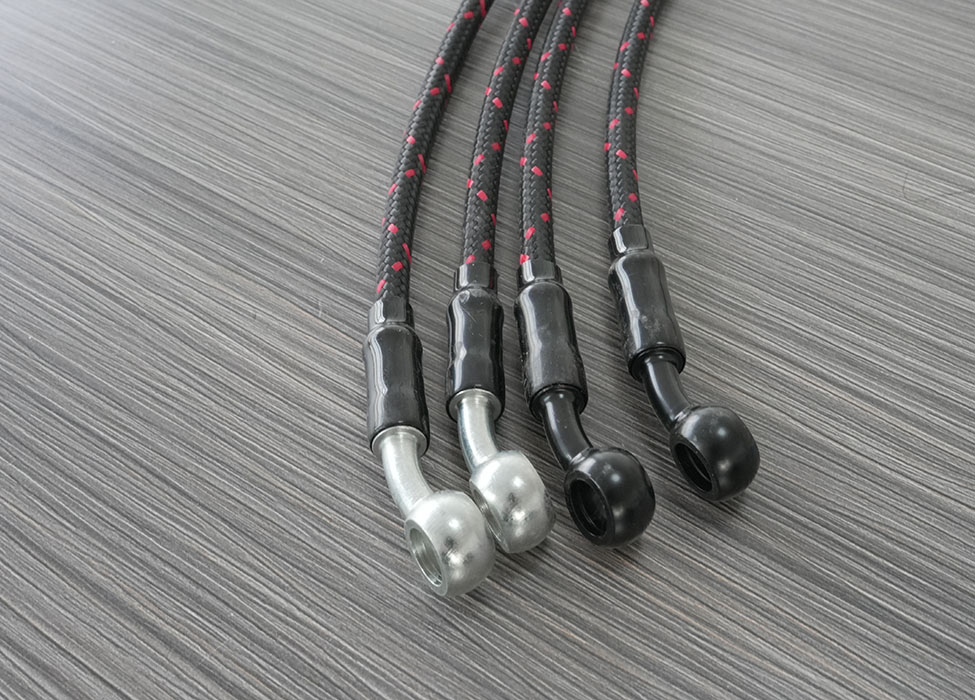
- Inner Liner Material is Key: Insist on PTFE (Teflon) or reinforced nylon. The color, like our vibrant Pink Hydraulic Brake Line or our subtle Black Hydraulic Brake Line, is a durable outer jacket. The performance comes from within.
- End Fitting Quality: Look for CNC-machined fittings, not cast. The sealing surface must be smooth to ensure a perfect seal with the copper washer.
- Certification for Your Market: Ensure the hose assembly meets relevant international or regional standards. This is critical for liability and market access.
- Supplier Reliability: As a factory, we understand that timely and stable supply is as important as product quality. Choose a partner with solid logistics, not just a product catalog.
Our Core Product Range: Performance in Every Color
We are a Brake Line & Brake Hose factory with a large stock, ready to meet your needs. Our flagship product line is our high-performance Hydraulic Brake Line series, available for cars, trucks, and specialty applications like Motorcycle Brake Lines. Our colors cater to different preferences: Blue Hydraulic Brake Line (popular for tuner cars), Green Hydraulic Brake Line (high visibility for off-road), Pink Hydraulic Brake Line (custom builds), Red Hydraulic Brake Line (classic performance look), Silver Hydraulic Brake Line (OEM+ style), and Black Hydraulic Brake Line (stealthy, professional appearance). All are built to the same high standard to eliminate drag and improve pedal feel.
FAQ: Compatibility and Customization
- Q: Are these braided hydraulic lines suitable for all vehicle makes and models? A: We provide coverage for the vast majority of common vehicles. More importantly, as a factory, we support individual customization. If you have a unique application, a classic car, or a racing vehicle, we can manufacture lines to your exact specifications. Simply provide us with the old sample or a detailed drawing, and we will produce a perfect match.
- Q: Can I install these myself, and is bleeding difficult? A: Installation is straightforward if you're mechanically inclined. The most critical step is thoroughly bleeding the system after installation to remove all air. Any trapped air will cause a spongy pedal. We recommend pressure bleeding for the best results. If you are not confident, have the work done by a professional.
 2026-2-2