Recent News
-
 2026-2-2
Why Choose Retrofit Brake Lines?

In markets such as Southeast Asia, the Middle East, Japan, Korea and Africa, one of the most misdiagnosed brake issues is a caliper that remains partially applied after releasing the pedal. Many technicians replace the caliper, only for the problem to return—because the root cause is frequently the brake hose itself.
Aged rubber brake hoses can develop an internal liner tear that acts like a check valve—allowing pressure in, but blocking fluid return to the master cylinder. This keeps the caliper piston extended.
Repeated thermal expansion weakens the inner tube, narrowing the passage and trapping hydraulic pressure.
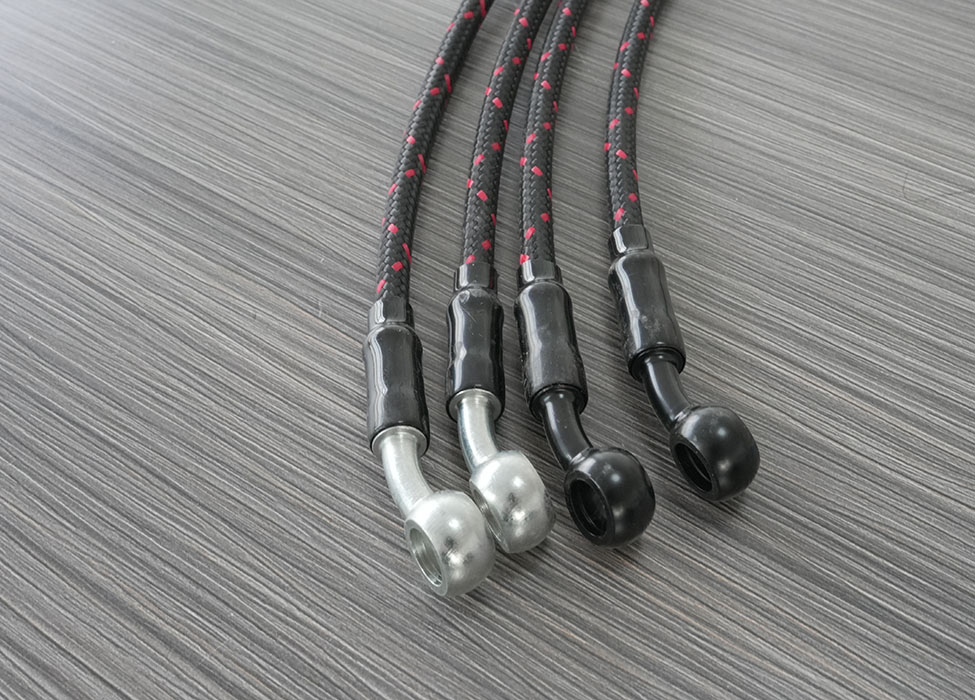
Replacing OE rubber lines with reinforced braided assemblies such as Blue Hydraulic Brake Line, Red Hydraulic Brake Line, or Black Hydraulic Brake Line eliminates internal flap risk and maintains full fluid return path.
How often should brake hoses be replaced?
Every 2–4 years depending on region and fluid type.
Do upgraded hoses really improve safety?
Yes. They prevent pressure trap conditions that cause caliper sticking.
Are they suitable for all cars and motorcycles?
Yes. Custom lengths and fittings are available for most applications.
View our complete range including Green Hydraulic Brake Line, Silver Hydraulic Brake Line and Pink Hydraulic Brake Line, or send us your drawings / specifications for a quote.
