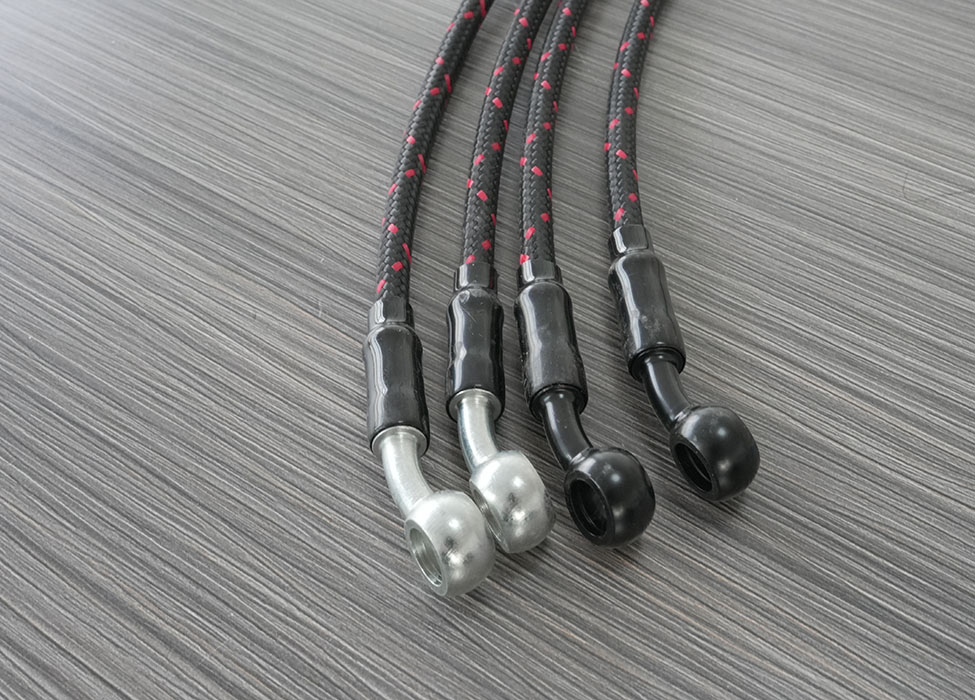
Brake Line Blockage Symptoms in Daily Driving: Early Warning Signs and Technical Notes
Why blockage symptoms should be checked early
Brake line blockage does not always create a sudden failure. In many vehicles, it starts as a small change in pedal feel, braking balance, or wheel release speed. Once the passage inside the line becomes restricted, the whole braking system loses efficiency.
Typical signs of a blocked brake line
1. Soft pedal with longer travel
A pedal that moves farther than normal before the brakes engage may indicate that fluid is not moving through the line correctly. This symptom is often linked to internal restriction or hose swelling.
2. Brake drag after stopping
If one wheel feels like it is not releasing normally, the line may be holding pressure or returning fluid slowly. That can create heat, wear, and unstable braking performance.
3. Uneven response between wheels
A blocked line can make one brake circuit react differently from the others. The vehicle may pull slightly or stop with a less balanced feel.
4. Performance changes after heat builds up
Some blockages become more obvious after repeated braking. Heat can worsen fluid issues, hose fatigue, and internal resistance.
Where the blockage usually starts
The most common problem areas are aged rubber sections, corroded fittings, damaged bends, and lines exposed to moisture or contaminated fluid. A visual inspection alone is not always enough, because the inner flow path may already be reduced.
Product selection and comparison
For buyers comparing color-coded hydraulic lines, Blue Hydraulic Brake Line, Red Hydraulic Brake Line, and Black Hydraulic Brake Line are often reviewed for branding, identification, and market positioning.
In some projects, Green Hydraulic Brake Line, Pink Hydraulic Brake Line, and Silver Hydraulic Brake Line are chosen for easier workshop sorting and product differentiation.
What engineers and buyers usually check
In export markets, buyers usually care about pressure stability, corrosion resistance, installation fit, and the quality of the inner tube and fittings. For two-wheel applications, Motorcycle Brake Lines are especially sensitive to routing accuracy and response consistency.
Practical maintenance advice
Replace brake fluid on schedule, inspect the hose near bends and fittings, and watch for swelling, rust, or slow release. If blockage symptoms are repeated, the safest solution is usually replacement rather than temporary repair.
Need a custom production plan?
If you have a drawing, a sample, or a special requirement, please contact us here: Contact us. We can support OEM and aftermarket projects for different vehicle platforms.
FAQ
What is the first symptom of brake line blockage?
The first symptom is often a pedal that feels softer, slower, or less consistent than usual.
Can brake line blockage be fixed without replacement?
If the internal passage is restricted by corrosion, collapse, or contamination, replacement is usually the more reliable choice.
How can buyers avoid selecting the wrong line?
Check the vehicle model, connector type, line length, routing space, pressure requirement, and application before ordering.