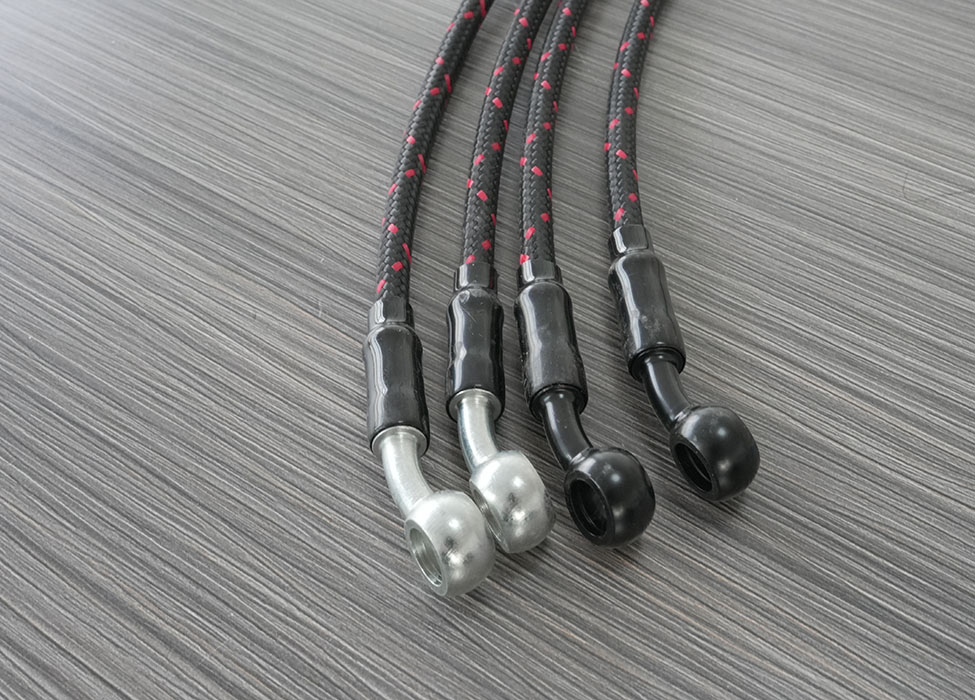
Brake Hose vs. Brake Hard Line: Materials, Performance and Application Differences
Hydraulic braking systems rely on a combination of rigid brake pipes and flexible brake hoses to transfer fluid pressure from the master cylinder to the braking components. Although both carry brake fluid, they serve different mechanical purposes and must be selected according to the vehicle's design.
For automotive engineers, motorcycle workshops, performance parts brands, and replacement-parts distributors, understanding the difference between a brake hose and a brake hard line is important when specifying replacement components or developing a custom brake line assembly.
The main distinction is flexibility. Rigid brake lines provide fixed routing along the vehicle chassis or body, while flexible hoses accommodate relative movement between components. Neither type should be treated as a universal substitute for the other.
1. What Is a Flexible Brake Hose?
A flexible brake hose is a hydraulic assembly designed to carry brake fluid while accommodating movement, vibration, and changes in component position. It is commonly used where the chassis, suspension, steering system, or wheel-end components move relative to one another.
Typical brake hose construction
- Inner liner: Contains the hydraulic fluid and must be compatible with the specified brake fluid and service conditions.
- Reinforcement: Provides mechanical strength and helps control expansion under hydraulic pressure.
- Outer protection: Helps protect against abrasion and environmental exposure where required by the application.
- End fittings: Connect the hose to the hydraulic circuit through the specified threads, sealing surfaces, or other approved connection methods.
Construction varies by product. Rubber hoses, PTFE-lined hoses, and other specialized hose designs should be assessed according to their actual specifications, intended applications, and documented performance requirements.
2. What Is a Brake Hard Line?
A brake hard line is a rigid tube used to carry hydraulic brake fluid along a fixed route. Depending on the vehicle and original equipment specification, it may be manufactured from coated steel, corrosion-resistant metal, or another material qualified for the application.
Typical characteristics of rigid brake lines
- Maintain a defined routing path along the chassis or body.
- Require correctly formed bends and suitable mounting supports.
- Use connection and sealing methods specified for the vehicle.
- Need protection against corrosion, impact, vibration-related fatigue, and damage during maintenance.
Rigid lines are suitable for fixed sections of a hydraulic circuit, but they cannot accommodate continuous relative movement in the same way as a flexible hose. The original system layout should be retained unless a redesigned arrangement has been properly engineered and validated.
3. Brake Hose vs. Brake Hard Line: Key Differences
Flexibility and movement
A flexible hose can accommodate suspension travel and steering movement when it is correctly specified and routed. A rigid line requires stable mounting and a carefully designed path. At moving wheel ends, an appropriate flexible connection helps prevent excessive mechanical stress on the hydraulic circuit.
Material selection and corrosion protection
Rigid steel lines depend on suitable material selection and corrosion protection. Flexible hoses depend on the performance of the inner liner, reinforcement, cover, and fittings. PTFE offers broad chemical resistance, while a suitable reinforcement structure can help provide the required mechanical strength.
Neither construction is immune to damage. Corrosion, abrasion, incorrect bending, heat exposure, poor installation, and unsuitable connections can compromise the complete assembly.
Hydraulic pressure and brake feel
Hydraulic pressure acts throughout the braking circuit, and all components must meet the applicable pressure requirements. Flexible hoses deform to some extent under pressure. A properly engineered reinforced PTFE hose may help control expansion and contribute to a more consistent pedal or lever feel.
However, brake feel depends on the complete system, including the master cylinder, calipers, pads, rotors, hydraulic fluid, hose dimensions, and installation. Changing a hose alone does not guarantee a shorter stopping distance.
Installation and maintenance
Rigid brake lines require appropriate bends, secure mounting, and correctly formed connections. Flexible assemblies require accurate length, suitable end-fitting orientation, adequate clearance, and freedom from twisting or tension throughout the full range of movement.
Both types should be inspected according to the vehicle manufacturer's maintenance instructions and replaced when damage, leakage, corrosion, or other unacceptable deterioration is identified.
4. Why Are PTFE Brake Hoses Used in Performance Applications?
PTFE stands for polytetrafluoroethylene, a fluoropolymer known for broad chemical resistance and temperature capability. Teflon is a trade name associated with PTFE products. PTFE-lined brake hoses are used in suitable performance and custom applications where hose expansion, fluid compatibility, and connection configuration are important design considerations.
Potential benefits of reinforced PTFE brake lines
- Controlled expansion: An appropriate liner and reinforcement design can help limit volumetric expansion under pressure.
- Chemical compatibility: PTFE offers broad resistance to many chemicals, but the complete assembly must be verified for the specified brake fluid and other materials.
- Temperature capability: The operating limits must account for the liner, reinforcement, protective cover, fittings, seals, and assembly design.
- Custom configuration: Different hose lengths, fitting orientations, and protective sleeves may be specified for suitable vehicle layouts.
These benefits depend on the design and validation of the finished assembly. A material designation or braided exterior alone does not establish pressure capability, durability, or regulatory compliance.
5. How to Select the Correct Brake Hose or Brake Line Assembly
Before placing an order, establish the exact vehicle application and hydraulic connection requirements. A product with the correct apparent length may still be unsuitable if its thread, sealing method, fitting angle, pressure rating, or routing is incorrect.
Fitment and specification checklist
- Confirm vehicle make, model, year, and brake configuration.
- Specify the installed length and measurement reference.
- Identify thread size, pitch, fitting style, sealing surface, and fitting orientation.
- Verify pressure rating, temperature requirements, and brake fluid compatibility.
- Check clearance through steering lock and suspension travel.
- Confirm the applicable road-use regulations and required product approvals.
- Request the relevant drawings, inspection records, and test documentation.
Related brake hose products
- Teflon Brake Hose – review PTFE-based hose options for applications that require a suitable flexible hydraulic connection.
- PTFE Brake Line Assembly – explore complete assemblies with specified hose lengths and end fittings.
- Rubber Brake Hose Assembly – review rubber-based assemblies for applications where they meet the relevant specifications.
For motorcycle applications, fitting angle and routing clearance can be particularly important because steering movement changes the position of the front brake hose. Confirm that the assembly remains free from tension, kinking, and interference throughout the permitted movement range.
6. Maintenance of Flexible Hoses and Rigid Brake Lines
Flexible hose inspection
- Look for cuts, cracks, bulges, abrasion, exposed reinforcement, and fluid leakage.
- Inspect fittings and crimped connections for damage or signs of leakage.
- Check for twisting, kinking, excessive tension, and contact with surrounding parts.
- Replace assemblies that do not meet the manufacturer's service requirements.
Rigid line inspection
- Check for corrosion, pitting, dents, flattened sections, and damaged bends.
- Inspect mounting clips, brackets, and connection points.
- Look for fluid leakage and damage around the specified connections.
- Use approved replacement materials and connection methods.
After hydraulic repairs, complete the required bleeding, leakage checks, and functional tests. The vehicle should not return to service until the braking system has been verified according to the applicable service procedure.
7. Frequently Asked Questions
Is a brake hose the same as a brake pipe?
No. A brake hose is flexible and accommodates movement, while a brake pipe or hard line generally follows a fixed route along the vehicle. Both may be used in the same hydraulic braking system.
Are braided PTFE brake lines always better than rubber hoses?
No. A properly engineered PTFE assembly may offer controlled expansion and application-specific benefits, but suitability depends on design, ratings, compatibility, installation, and validation. A correctly specified OEM rubber hose may be the appropriate option for many vehicles.
Can a rigid brake pipe replace a flexible hose?
Not where the original design requires movement accommodation, unless the complete redesigned system has been appropriately engineered and validated. An unsuitable rigid connection may introduce excessive mechanical stress.
Are aftermarket brake hoses universal?
No. Hose length, thread type, fitting geometry, sealing surfaces, pressure rating, fluid compatibility, and routing requirements vary between applications. Fitment must be confirmed before installation.
8. Custom Brake Line Solutions for OEM and Aftermarket Buyers
For distributors, OEM manufacturers, performance brands, and motorcycle workshops, a suitable supplier should be able to review drawings, verify connection details, control production dimensions, and provide applicable product documentation.
When requesting a quotation, provide a drawing or sample, intended application, hose length, end-fitting specifications, operating conditions, target quantity, and destination market. These details help establish the correct configuration and identify any additional testing or compliance requirements.
For custom assemblies, technical drawings, or product inquiries, visit Contact Us for Brake Hose and Brake Line Solutions.
9. Related Technical Guides
- Can Brake Hoses Be Repaired? Replacement and Inspection Guide
- PTFE Teflon Brake Hose: Construction and Performance Guide
Engineering note: Flexible hoses and rigid brake lines are safety-critical components. Always follow the vehicle manufacturer's requirements, the assembly specifications, and applicable regulations.