Brake Hose Collapse Symptoms: Early Warning Signs You Should Not Ignore
Brake hose collapse is a hidden failure mode that can affect pedal feel, braking response, and wheel release performance. In daily service, the outer surface of the hose may still look acceptable, while the internal structure has already started to deform or restrict fluid flow. For workshops, distributors, and performance buyers, recognizing the early symptoms is the key to avoiding repeated brake problems and unnecessary part replacement.
What Brake Hose Collapse Usually Feels Like
Delayed braking response
One of the first signs is a slower-than-normal response after the pedal is pressed. The system may still build pressure, but the fluid does not move through the hose as freely as it should. This can happen when the inner liner weakens, swells, or partially closes under pressure.
Soft pedal with inconsistent feedback
A soft pedal is often linked to air in the system, but hose collapse can create a similar feeling. The driver may notice that the pedal response changes between cold and hot conditions, or that the braking action becomes less predictable after repeated stops.
Brake drag after release
If the wheel does not release properly after braking, the hose may be trapping pressure. The vehicle may feel heavier to move, the rotor may become hotter than normal, and fuel consumption can rise because the brakes are not fully disengaging.
Uneven braking force
When one hose is restricted more than the others, braking force becomes unbalanced. The vehicle may pull to one side during braking, or one wheel may show a different temperature and pad wear pattern from the opposite side.
Why Collapse Happens Inside the Hose
Brake hose collapse is usually caused by internal aging, poor material quality, fluid contamination, repeated heat exposure, or incorrect installation. In hot and humid markets, these issues appear more often because the hose works under more stress. Dust, moisture, and long service intervals also speed up deterioration.
Product Types Commonly Compared by Buyers
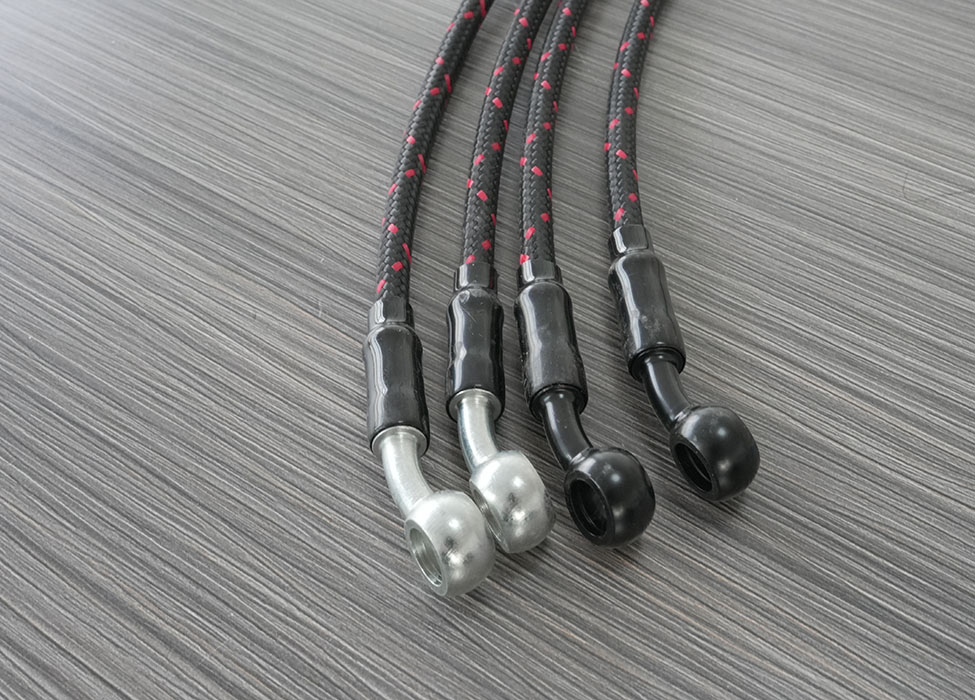
Different replacement options are used in different applications. Some buyers prefer colored performance styles for aftermarket projects, while others focus on routing, pressure stability, and long-term durability. The following products are often compared during sourcing:
- Blue Hydraulic Brake Line for performance-style customization and visual identification.
- Red Hydraulic Brake Line for aftermarket builds that need clear product distinction.
- Black Hydraulic Brake Line for a clean OEM-style appearance.
- Silver Hydraulic Brake Line for a classic technical look and broad application.
How to Diagnose the Problem More Accurately
Check wheel temperature after a road test
A wheel that is significantly hotter than the others can indicate trapped pressure or restricted return flow. This is a practical first step for technicians in the field.
Inspect hose routing and bending points
Tight bends, twisting, rubbing, and poor clamp placement can accelerate internal damage. A hose that is routed correctly will usually last longer and maintain more stable performance.
Compare pedal response side by side
If one side reacts differently, the issue may be localized to a single hose or line rather than the entire braking system.
Selection Advice for Buyers
When selecting a replacement brake line or hose, do not focus only on color or price. Confirm the inner construction, pressure rating, fitting type, vehicle model, and temperature resistance. For export markets, consistency is more important than one-time low cost.
Main Products
Our main product range includes Blue Hydraulic Brake Line, Green Hydraulic Brake Line, Pink Hydraulic Brake Line, Red Hydraulic Brake Line, Silver Hydraulic Brake Line, Black Hydraulic Brake Line, and Motorcycle Brake Lines.
FAQ
How often should brake hoses be replaced?
The replacement interval depends on vehicle usage, climate, hose material, and inspection results. If the hose shows swelling, cracking, soft spots, drag, or poor response, replacement should be considered immediately.
Does an upgraded brake hose improve safety?
Yes, when the product is properly matched to the vehicle and installed correctly. A better hose can improve response consistency, heat resistance, and pedal feel.
Is it suitable for all vehicle models?
No. Fitment depends on the brake layout, mounting position, hose length, and end fitting specification. Always confirm compatibility before ordering.
Need a Custom Solution?
If you have drawings, samples, or a specific style requirement, send them to us for technical matching. We support OEM, wholesale, and custom production projects.
Contact Us if you need quotation, sample support, or a custom brake line solution.