Brake Hose Collapse and Internal Flattening – Symptoms Often Misdiagnosed as Master Cylinder Failure
In hot climates such as Southeast Asia, the Middle East, and parts of Africa, we frequently see performance and daily-driven vehicles suffering from vague brake pedal feel caused not by the master cylinder—but by internal collapse of aged rubber brake hoses. This condition is difficult to spot visually but has a major impact on hydraulic flow.
Typical Symptoms of a Collapsed or Kinked Brake Hose
- Pedal feels firm when engine off, but sinks or gets "dead" under running pressure
- One caliper heats up significantly more than the other – restricted return flow
- Brakes drag after releasing pedal – collapsed liner acts like a one-way valve
- No improvement after bleeding – fluid path is physically narrowed inside hose
Why Brake Hoses Collapse Internally
1. Rubber Liner Aging & Heat Cycling
Repeated thermal expansion weakens the inner tube, causing it to flatten under suction when the pedal is released.
2. Improper Routing or Sharp Bends
Factory routing with insufficient clearance can pinch the hose during full suspension travel or steering lock.
3. Original Equipment Design Limitations
Many OE rubber hoses lack anti-collapse reinforcement, especially on older Japanese and Korean models common in export markets.
Why Upgrading to Reinforced Hydraulic Brake Lines Matters
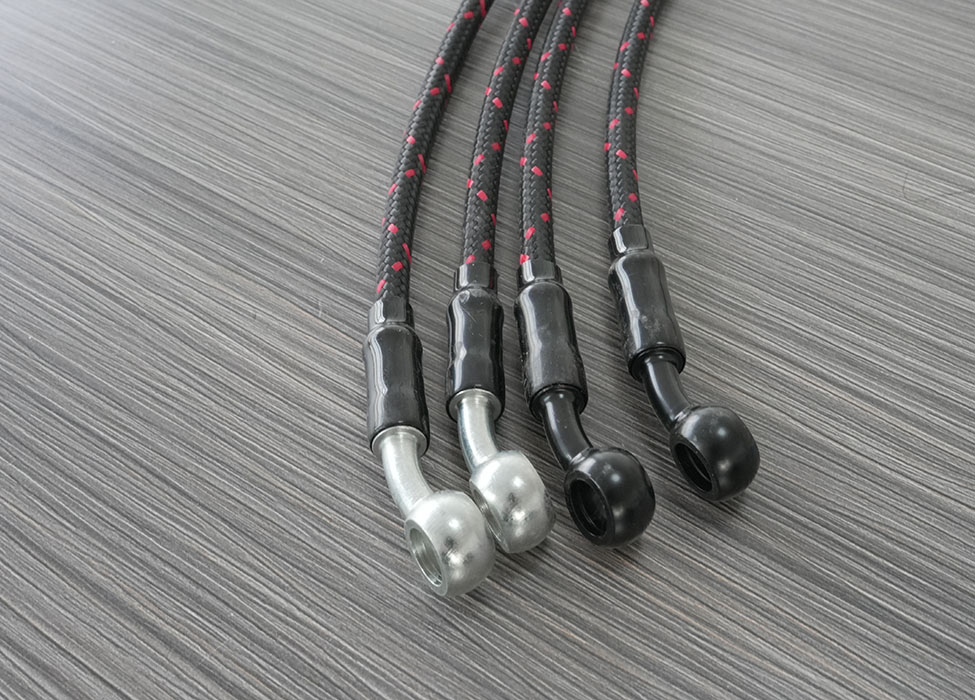
Our Black Hydraulic Brake Line, Silver Hydraulic Brake Line, and PTFE-core braided assemblies prevent internal flattening thanks to high-pressure-resistant cores and stainless/nylon overbraid.
Recommended Product Range for Replacement & Tuning
- Blue Hydraulic Brake Line
- Green Hydraulic Brake Line
- Red Hydraulic Brake Line
- Pink Hydraulic Brake Line
Buying Tips – Avoid Costly Mismatches
- Confirm banjo bolt size (M10×1.0 / M10×1.25 / AN3 etc.)
- Check hose length with suspension at full drop
- Choose color-coded lines for easier LHS/RHS identification during service
Routine Inspection Advice
During every brake fluid flush, run your hand along the hose. Any flat spots, stiffness, or cracking mean immediate replacement—especially on vehicles over 5 years old in tropical regions.
FAQ – Importer & Workshop Questions
Q: How often should brake hoses be replaced?
A: Rubber hoses: 4–6 years. Performance braided lines: inspect every 2–3 years; replace if outer braid is damaged.
Q: Do upgraded hoses really improve safety?
A: Yes. They eliminate expansion and collapse, giving consistent pedal modulation and shorter stopping distance.
Q: Are these suitable for all makes?
A: We custom-make for cars & Motorcycle Brake Lines. Send drawings or photos via our Contact Page.