Recent News
-
 2026-2-2
Why Choose Retrofit Brake Lines?

As a brake hose manufacturer, we receive frequent technical inquiries about brakes that "stick" or "bind" after use. This persistent drag is more than an annoyance—it's a symptom of a system struggling to return to its neutral state. For importers and workshops in Southeast Asia and Japan, where stop-and-go traffic is common, understanding the hydraulic principles behind this failure is key to recommending the correct repair.
Think of the brake system as a closed-loop hydraulic circuit. When you press the pedal, the master cylinder creates pressure, which travels through the lines to push the caliper pistons. When you release the pedal, the system relies on the retraction force of the caliper piston seals (and in drum brakes, the return springs) to push the fluid back, lowering the pressure. Any restriction in the return path disrupts this equilibrium.
Symptom: Drag is present on one or more wheels immediately after braking and does not lessen once the car is stopped and lifted. The rotor is uniformly hot across its surface.
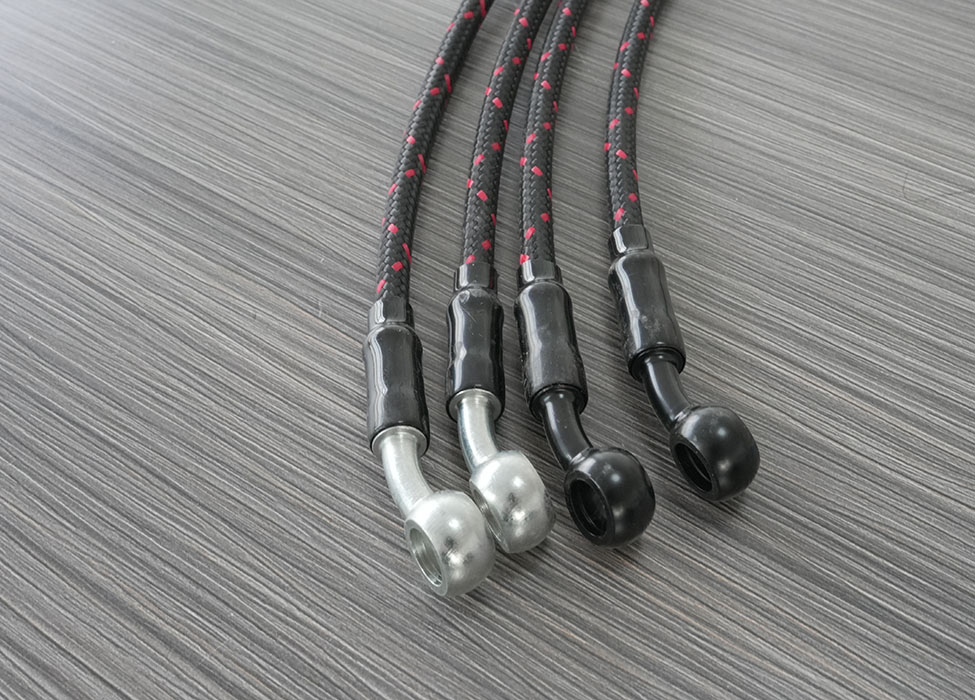
Common Culprit: Degraded OEM Hose. The internal breakdown of a rubber hose is a major cause. The debris can also travel and clog the small orifices in the ABS modulator, a much more expensive repair. Proactively replacing aged rubber hoses with a performance braided line eliminates this risk.
Symptom: Drag may increase as the components heat up and expand. You may hear a constant light scraping sound. The heat pattern on the rotor might be uneven.
Solution: This requires caliper service—rebuilding or replacing the caliper and thoroughly cleaning and lubricating the guide pins with proper brake grease.
When diagnosing drag, we advise workshops to consider the hose as a potential cause, especially on vehicles over 5 years old. Swapping a suspected rubber hose for a braided line is a straightforward test and a permanent upgrade.
On motorcycles, drag is especially dangerous as it can affect handling and cause rapid fluid boil due to the smaller fluid volume. A sticky front brake can lead to a catastrophic loss of control. Upgrading stock rubber lines to steel-braided Motorcycle Brake Lines is one of the most recommended safety mods. The improved lever feel also allows the rider to better detect early signs of pad contact.
Even the best hose can cause problems if installed incorrectly.
Q: We see many vehicles with seized caliper slides. Should we still recommend new hoses?
A> Yes, as a package. If the caliper is sticking due to corrosion, the hydraulic system has been under stress. The old rubber hoses are likely fatigued. When doing a caliper service, replacing all flex hoses with braided lines like our Black Hydraulic Brake Line ensures a completely renewed and reliable hydraulic circuit.
Q: Do you offer braided lines for commercial trucks?
A> Yes. The principle is the same. We can manufacture braided air brake lines or hydraulic lines for trucks and buses with the appropriate DOT/SAE certifications for your market. Contact us for commercial specifications.
Q: What is the warranty on your braided lines against internal failure?
A> Our braided lines are backed by a limited lifetime warranty against defects in materials and workmanship. The PTFE core is not subject to the internal degradation that plagues rubber hoses.
Our Product Range: We supply a complete range of Hydraulic Brake Lines, including all standard colors (Blue, Green, Pink, Red, Silver, Black) and custom configurations for cars, motorcycles, and specialty vehicles. Our fully automated production ensures consistency for bulk orders.
For Custom Projects & OEMs: Provide us with your sample or technical drawing. Email our factory at antutech2026@gmail.com for engineering collaboration and competitive pricing.
