Recent News
-
 2026-2-2
Why Choose Retrofit Brake Lines?

In practical workshop conditions, a brake caliper that does not fully release will cause constant friction between pads and disc. This leads to overheating, accelerated wear, and increased fuel consumption. In severe cases, it can result in brake fade or complete brake lock.
One of the most overlooked causes is internal collapse or restriction of the brake hose. Fluid pressure can reach the caliper, but cannot return efficiently, keeping the piston engaged.
In high-temperature regions such as the Middle East or Africa, standard hoses may expand under pressure, affecting fluid return timing.
Moisture-contaminated fluid increases viscosity and reduces hydraulic efficiency.
Low-grade materials degrade faster under UV exposure and heat cycles.
Upgrading to reinforced hydraulic brake lines improves pressure stability and ensures smooth fluid return.
Blue Hydraulic Brake Line |Red Hydraulic Brake Line |Black Hydraulic Brake Line
For custom specifications or drawings, please contact us for engineering support.
For humid regions in Southeast Asia, corrosion-resistant coatings are critical.
Silver Hydraulic Brake Line |Green Hydraulic Brake Line
Need bulk supply or OEM branding? Send inquiry.
Flexible but pressure-stable hoses are ideal for motorcycles and performance vehicles.
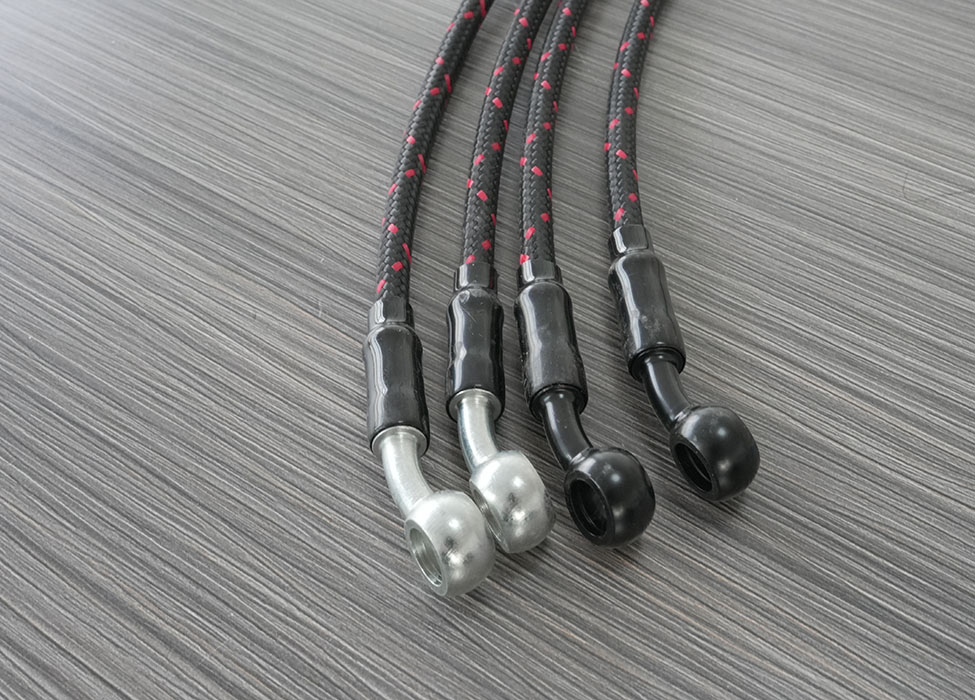
Pink Hydraulic Brake Line |Black Hydraulic Brake Line
We support custom hose assembly. Contact us now.
Typically every 3–5 years depending on environment.
Yes, they reduce expansion and improve braking response.
Yes, with proper fittings and specifications.
We manufacture a full range of hydraulic brake lines including colored performance lines and motorcycle brake lines for global distributors.
