Recent News
-
 2026-2-2
Why Choose Retrofit Brake Lines?

From the perspective of hydraulic brake system engineering, air contamination is one of the most common root causes of braking failure. Combining thousands of repair cases from global markets, this article explains the formation mechanism, identifiable symptoms and preventive solutions, helping users and distributors understand the technical logic behind air intrusion and choose reliable modified brake lines.
Pedal pressure cannot be fully converted into caliper clamping force. There is an obvious lag between input and output, and the braking feel becomes vague and uncontrollable—typical of air-induced pressure attenuation.
Brake fluid level drops slowly with no external leakage. Air accumulation compresses the fluid volume, creating false consumption. This symptom is easily overlooked but indicates internal air intake.
Moisture in fluid vaporizes into air bubbles under heavy braking heat. Performance drops sharply, pedal becomes softer, and braking efficiency decreases—common in modified cars, SUVs and performance motorcycles.
Air blocks fluid return flow, causing piston incomplete retraction. Pads drag on discs, leading to abnormal noise, overheating and accelerated wear—direct result of air-induced hydraulic obstruction.
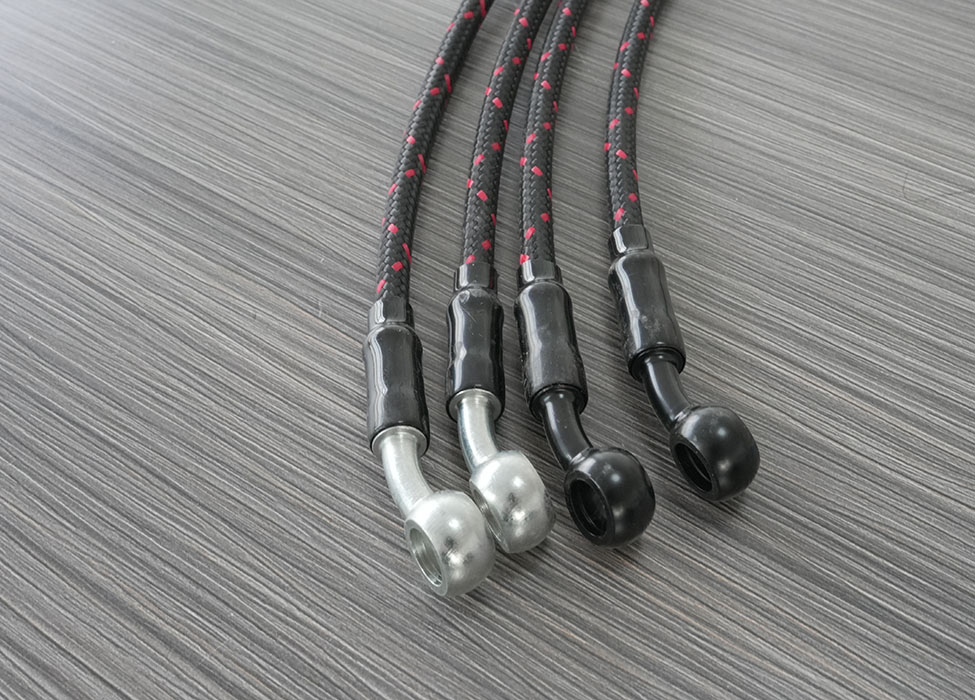
Our engineered brake lines solve air intrusion risks with premium design and strict quality control. Hot-selling products:
If you have questions about fault diagnosis, product selection, color customization or assembly design, send us your drawings or requirements. We provide professional OEM/ODM support for global clients.
Contact Us for bulk pricing and fitment confirmation.
All products must meet SAE J1401, DOT and international safety standards, ensuring stable performance and smooth customs clearance in target markets.
Correct length, angle and fitting type avoid twisting, stress and gaps—critical factors preventing air intrusion during operation.
Modified lines last 2–3 times longer than standard hoses, reducing maintenance frequency and long-term costs.
Use only qualified brake fluid; never mix different types. Keep the system clean during installation. Bleed air in the correct sequence. Regularly check joint tightness to prevent slow air intake.
Standard hoses: 3–5 years. Upgraded modified hydraulic lines: up to 8 years with proper maintenance.
Yes. Upgraded lines improve sealing, pressure resistance and transmission stability, effectively eliminating air intrusion risks.
We support most cars, motorcycles and modified platforms. Provide your vehicle details for accurate matching.
