
Why Do Braided Brake Lines Make the Brake Lever Feel More Direct?
Why Do Braided Brake Lines Make the Brake Lever Feel More Direct?
One of the most common reasons riders install stainless steel braided brake lines is the change in brake lever feel.
The difference is often described as a firmer lever, a more direct response or better control during braking. To understand why this happens, it is necessary to look at the hydraulic behavior of the complete brake system rather than simply focusing on the stainless steel braid.
The Relationship Between Hose Expansion and Brake Feel
A motorcycle brake system converts mechanical lever movement into hydraulic pressure. The pressure is then transferred through the brake hose to the caliper.
Because the hose is flexible, part of the hydraulic energy can be associated with expansion of the hose wall when pressure increases.
Conventional Rubber Brake Hose
Rubber hose is flexible by design. This flexibility is useful because the front brake hose has to accommodate steering and suspension movement.
However, the flexibility of the hose also means that its dimensions can change slightly under hydraulic pressure.
As a rubber hose ages, repeated heat cycles, mechanical movement and environmental exposure can also affect its physical properties.
Reinforced Braided Construction
A stainless steel braided construction adds reinforcement around the inner tube. The purpose of the reinforcement is to help control expansion when the hose is pressurized.
For this reason, a properly manufactured braided brake line may provide a firmer and more predictable lever response than an old or less rigid hose construction.
Why Brake Feel Matters on a Modified Motorcycle
For everyday riding, predictable braking response is important. For performance riding, the ability to control the initial bite and modulation of the brake can become even more noticeable.
Initial Brake Application
The first part of lever movement is where the rider begins to establish braking force. A consistent hydraulic response makes this stage easier to judge.
Repeated Hard Braking
During repeated braking, heat builds up in the brake system. A properly specified hose should continue to operate within its intended temperature and pressure range.
Brake Modulation
Modulation refers to the rider's ability to control braking force smoothly rather than simply switching between braking and no braking.
Good modulation depends on the entire system. The brake hose is one part of that system, not the only factor.
How to Select a Motorcycle Brake Line
Start With the Actual Motorcycle
Do not select a hose only according to appearance. Confirm the motorcycle model, brake configuration and any aftermarket components.
Measure the Hose
Measure the required length along the intended routing path. Allow enough length for full steering and suspension movement without creating excessive slack.
Confirm the End Fittings
Check thread size, pitch, banjo specifications, fitting angle and sealing arrangement. These dimensions should be confirmed before ordering production quantities.
Colored Brake Lines for Motorcycle Modification
Colored hydraulic brake lines are popular in the aftermarket because the brake hose can become part of the motorcycle's overall visual design.
Green Hydraulic Brake Line
Green Hydraulic Brake Line is suitable for customized motorcycle projects where the brake hose needs to match a green color scheme or provide a stronger visual contrast.
For B2B buyers, color can be customized as part of a broader product specification, while hose construction and fitting requirements remain the priority.
Pink Hydraulic Brake Line
Pink Hydraulic Brake Line is often selected for distinctive aftermarket motorcycle builds and customized appearance packages.
For distributors, repair shops and motorcycle modification brands, the product can be specified by application, length and fitting configuration rather than color alone.
Silver Hydraulic Brake Line
Silver Hydraulic Brake Line provides a neutral metallic appearance that can work with a wide range of motorcycle designs.
It is suitable for projects where the customer wants the visual characteristics of a braided brake line without a strong colored finish.
What Can Cause Poor Brake Feel Even After a Hose Upgrade?
If a motorcycle still has a soft brake lever after installing a new hose, the hose may not be the actual cause.
Air in the Hydraulic System
Air in the brake system can create a soft or spongy lever. Proper bleeding is essential after opening the hydraulic system.
Old Brake Fluid
Brake fluid absorbs moisture over time depending on the fluid type and operating environment. Follow the vehicle manufacturer's recommended fluid replacement procedure.
Worn Brake Pads or Discs
The condition of friction components also affects braking response. A hose replacement cannot compensate for severely worn or unsuitable pads and discs.
Incorrect Hose Installation
A kinked, twisted or improperly routed hose can create problems even when the hose itself meets the required specification.
Daily Maintenance Checklist
- Inspect the hose for abrasion.
- Check for fluid leakage around fittings.
- Look for abnormal swelling or damage.
- Check full handlebar movement.
- Make sure the hose does not contact hot or moving components.
- Inspect the braid and outer surface periodically.
- Check brake lever feel during routine maintenance.
When Should a Brake Hose Be Replaced?
There is no single replacement period that applies to every motorcycle.
A hose should be inspected according to its age, environment and condition. Cracking, severe abrasion, leakage, abnormal swelling or other structural damage are reasons to stop and inspect the hose before further use.
Can We Manufacture Brake Lines From Your Drawing or Sample?
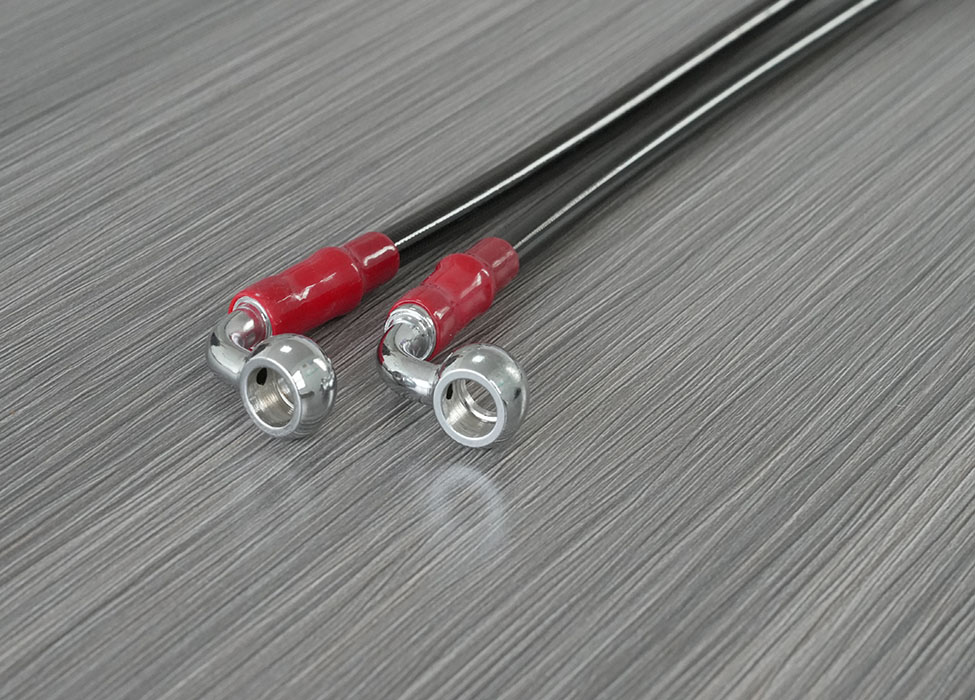
Yes. For aftermarket and OEM projects, an existing sample can provide useful information about hose length, fitting type, fitting orientation and assembly construction.
If you do not know the exact specification, send us a drawing, sample, photos or dimensions. We can discuss the required construction before production.
Contact us for customized motorcycle brake lines, OEM development and wholesale supply.
FAQ About Braided Motorcycle Brake Lines
How long do stainless steel braided brake lines last?
There is no fixed service life for every application. Environmental exposure, mechanical movement, heat, installation quality and hose construction all affect service life. Regular inspection is essential.
Does a braided brake line make braking stronger?
Not directly. The main potential benefit is improved control of hose expansion and more consistent hydraulic response. Overall braking force depends on the complete braking system.
Can I use a colored braided brake line on any motorcycle?
Color does not determine compatibility. The hose length, fittings, thread specification, construction and routing must match the motorcycle.
Is a braided brake line better than an OEM rubber hose?
Not in every situation. A correctly specified OEM rubber hose can be suitable for many applications. A reinforced braided hose may be preferred where the customer wants a particular hydraulic response, appearance or modified configuration.
Our Motorcycle Brake Line Range
Our main product range includes colored and customized motorcycle brake lines for aftermarket, OEM and wholesale applications:
- Blue Hydraulic Brake Line
- Green Hydraulic Brake Line
- Pink Hydraulic Brake Line
- Red Hydraulic Brake Line
- Silver Hydraulic Brake Line
- Black Hydraulic Brake Line
- Motorcycle Brake Lines
We can supply different lengths, fitting configurations and customized specifications according to application requirements.
2026-2-2
