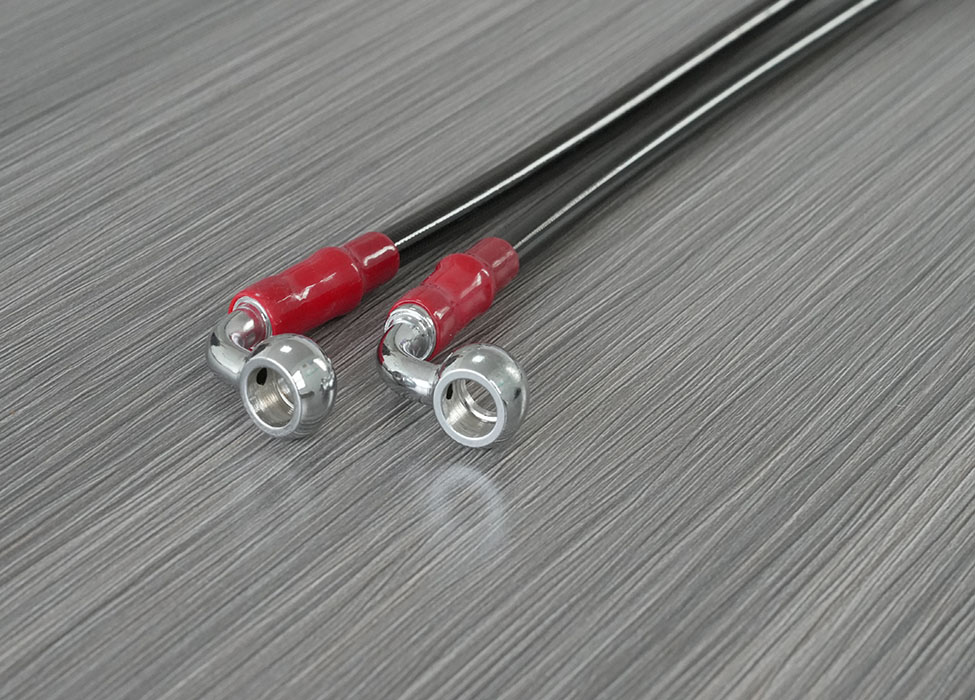
Stainless Steel Braided Brake Hose Specifications Explained: What Buyers Need to Know
When purchasing stainless steel braided brake hoses, many buyers focus on hose color and outside appearance. For technical applications, these are only a small part of the specification. The inner tube, reinforcement, outside diameter, working pressure, temperature range, fittings, hose length and crimping process all affect the finished brake hose assembly.
Understanding these specifications makes it easier for motorcycle parts distributors, importers, modification shops and OEM buyers to compare different suppliers.
1. Brake Hose Construction
A stainless steel braided brake hose is normally built from several functional layers. Each layer has a different job and should be considered as part of the complete hose assembly.
Typical Construction
- Inner tube for brake fluid compatibility
- Stainless steel braided reinforcement
- Protective outer layer where required
- Metal fittings
- Crimped connection between hose and fitting
The final performance of the assembly depends on how these components work together rather than on the braid alone.
2. Inner Tube Material
PTFE is commonly used as an inner tube material for performance-oriented brake hose assemblies. It offers good chemical resistance and can be used with suitable brake fluids and operating temperatures when the hose is correctly designed.
For other applications, rubber or nylon-based hose constructions may also be appropriate depending on the system requirements.
Buyers should always ask the manufacturer to specify the actual material rather than relying on descriptions such as “high performance” or “racing type.”
3. Stainless Steel Braid
The stainless steel braid is the reinforcement layer around the inner tube. Its purpose is to provide mechanical strength and help control dimensional changes under pressure.
When evaluating a supplier, look beyond the phrase “stainless steel braided.” Ask about the actual hose construction, braid specification, production consistency and finished assembly testing.
Why Reinforcement Matters
Hydraulic braking systems operate under pressure. The hose therefore needs to maintain its intended dimensions while remaining flexible enough to follow the vehicle's routing requirements.
A good brake hose design balances pressure resistance, flexibility, bend radius and installation requirements.
4. Working Pressure and Test Pressure
Working pressure and test pressure are not the same specification.
Working pressure refers to the pressure range for which the hose is designed during normal operation. Test pressure is associated with controlled testing and should not automatically be interpreted as the pressure that the hose should experience continuously.
For OEM and aftermarket purchasing, buyers should request the manufacturer's documented pressure specifications for the exact hose construction rather than comparing numbers from unrelated products.
5. Temperature Range
Brake hoses can be exposed to different temperatures depending on vehicle type, brake system layout, driving conditions and proximity to heat sources.
The temperature capability of a brake hose is influenced by the inner tube material, outer covering, fittings and overall construction.
When a brake hose is installed near a high-temperature area, the routing and heat protection should be considered together with the hose specification.
6. Hose Outside Diameter and Bend Radius
Outside diameter affects installation space, while bend radius affects how the hose can be routed without excessive bending.
A hose should not be forced into a sharp bend simply because the nominal length is correct. During motorcycle steering and suspension movement, the hose should have sufficient clearance and should not be twisted or pulled tight.
Installation Checks
- Check full steering movement.
- Check suspension movement.
- Keep the hose away from sharp edges.
- Avoid continuous rubbing against brackets or body panels.
- Avoid excessive twisting near fittings.
- Confirm sufficient clearance from hot components.
7. Fittings and Connection Specifications
The fitting is one of the most important parts of a brake hose assembly because it connects the hose to the hydraulic system.
For a custom order, the manufacturer normally needs information about the fitting type, thread specification, angle, orientation and connection dimensions.
A small difference in fitting geometry can affect installation, so photographs alone may not always be sufficient for production. A drawing or physical sample is often more reliable.
8. Hose Length Tolerance
For aftermarket and OEM replacement brake hoses, length consistency is important for both installation and repeat production.
When placing a bulk order, buyers should confirm the required hose length and acceptable tolerance before production. This becomes particularly important when the same hose assembly will be reordered repeatedly.
For motorcycle applications, our Motorcycle Brake Lines can be developed around customer drawings, samples and vehicle-specific requirements.
9. Color Options for Aftermarket Brake Lines
Color is often part of the product specification for motorcycle modification markets. Different colors can be used for product differentiation, vehicle styling or customer preference.
Available product options can include:
- Blue Hydraulic Brake Line
- Green Hydraulic Brake Line
- Pink Hydraulic Brake Line
- Red Hydraulic Brake Line
Color should be treated as an appearance or product identification option. It should not replace technical specifications when comparing brake hose suppliers.
10. Stainless Steel Braided Brake Hose vs Standard Rubber Hose
Rubber brake hoses remain widely used in original equipment and replacement applications. Stainless steel braided constructions are commonly selected when buyers require a different combination of pressure control, flexibility, durability and aftermarket appearance.
The correct choice depends on the vehicle, brake system design and intended operating conditions. A braided hose is not automatically the correct solution for every application.
11. Daily Inspection and Maintenance
Brake hose inspection should be included in normal vehicle maintenance.
- Inspect the hose surface for cuts and abrasion.
- Check for fluid leakage.
- Inspect the crimped area.
- Check fittings for corrosion or deformation.
- Check hose routing after suspension or brake modifications.
- Replace damaged components instead of continuing to use them.
12. What We Manufacture
Our brake hose manufacturing range covers stainless steel braided hydraulic brake lines, motorcycle brake lines, customized brake hose assemblies and different color configurations for aftermarket applications.
For customers requiring a more understated appearance, our Black Hydraulic Brake Line and Silver Hydraulic Brake Line options can be used for different product configurations.
13. FAQ
How often should a stainless steel braided brake hose be replaced?
Replacement should be based on the vehicle manufacturer's recommendations, application conditions and actual hose condition. There is no universal replacement interval for every braided brake hose.
Does a braided brake hose automatically improve braking safety?
No single component can guarantee braking safety. A correctly specified braided hose may provide useful hydraulic and mechanical characteristics, but the complete braking system and installation must be considered.
Can stainless steel braided brake hoses be used on every motorcycle?
No. Compatibility depends on hose length, fittings, thread specifications, routing, brake fluid compatibility and the specific motorcycle braking system.
Can the hose color be customized?
Color options can be customized for many aftermarket applications. The final available colors depend on the specific hose construction and production requirements.
Can you manufacture according to an existing sample?
Yes. An existing hose sample is useful for checking length, fitting configuration, orientation and construction requirements.
If you are developing a new brake hose or replacing an existing product, you can send us your drawing, sample or required style for technical evaluation.
Contact our factory for brake hose specifications, samples and OEM quotations.